

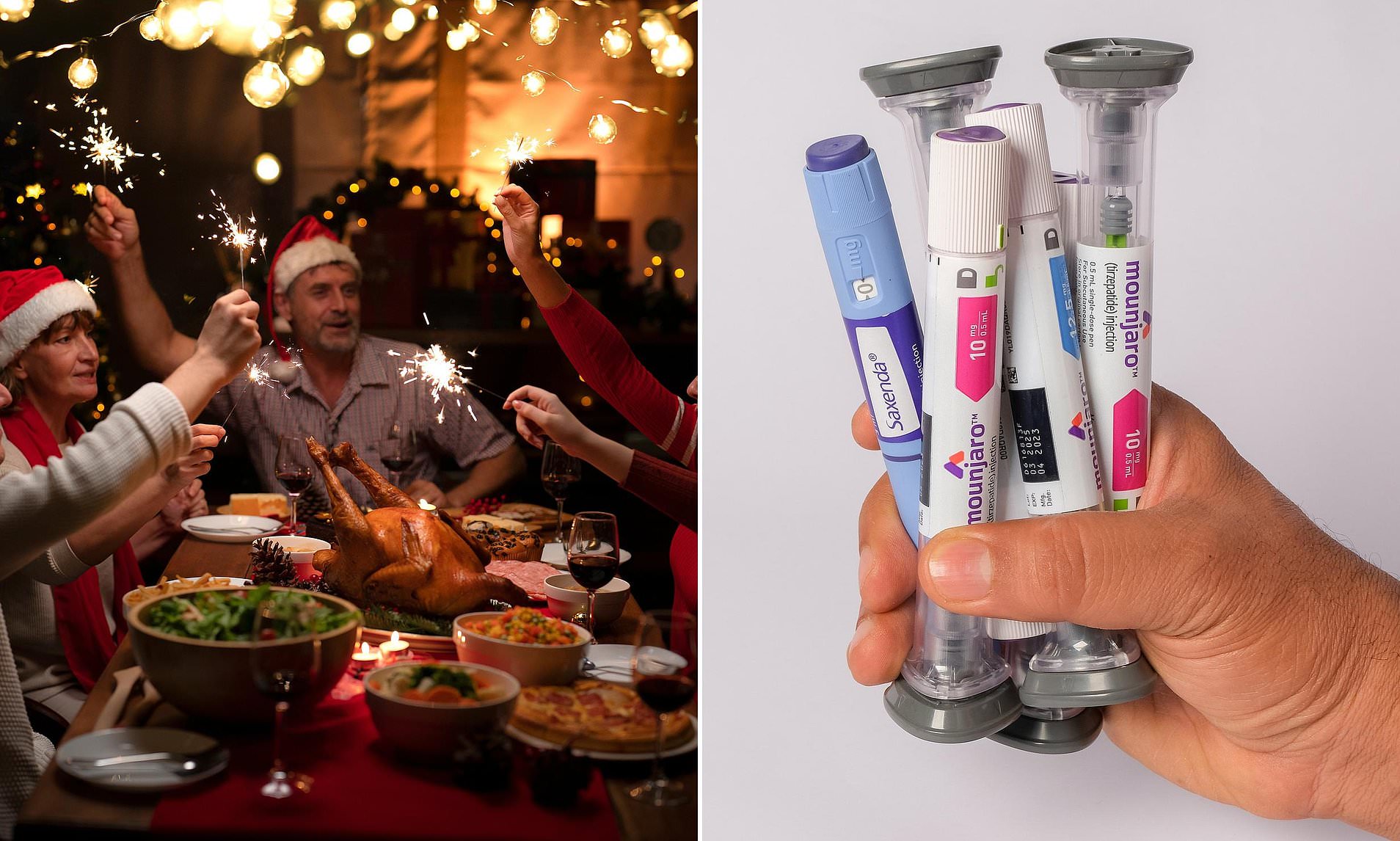
A leading pharmacist is cautioning individuals in the UK against temporarily discontinuing their weight loss injections during the Christmas season. Abruptly halting these medications, he warns, can trigger significant adverse effects upon resumption.
Ozempic, Mounjaro, and Wegovy, all classified as GLP-1 agonists, function by curbing appetite and diminishing hunger. They achieve this by reducing “food noise,” a term used to describe intrusive thoughts and cravings often centered around high-fat, carbohydrate-rich foods. Initially developed as a treatment for type 2 diabetes, these medications have gained popularity as off-label weight loss solutions, with an estimated 1.5 million people in the UK currently using them.
As the Christmas holiday approaches, many users are contemplating pausing their injections for a week or two. The goal is to fully indulge in Christmas dinner and other festive foods without the constraints of a suppressed appetite.
However, Aaron Arman, Superintendent Pharmacist at CheqUp, cautions against this practice, citing potential health risks when restarting the medication.
“Unless there is a clear clinical reason, we advise against stopping GLP-1 treatment abruptly, as doing so can lead to rebound high blood sugar and rapid weight regain,” Arman stated.
“These risks are only heightened during a festive period typically associated with higher carbohydrate and sugar intake. These medications work by regulating appetite, digestion and glucose control, so suddenly stopping them removes these protective effects and can undermine long-treatment goals.”

Recent research highlights that over a third of individuals using GLP-1 medications are planning to reduce their dosage during Christmas, with the majority intending to return to their regular dose only after the New Year. Restarting the injections after a break, especially at a higher dosage, could pose health risks.
“Patients who pause their medication may also experience stronger side effects when restarting, as the body loses its built-up tolerance,” Arman explained. “Anyone considering changes to their medication over the holidays should speak up with their prescribing clinician first.”
CheqUp conducted a poll of 500 adults in the UK who are currently using these medications, gathering data at the end of October of this year. The survey revealed that while 42% of respondents plan to maintain their usual dosage throughout the holiday period, a concerning 10% intend to take a complete break from the medication.
Among those planning to reduce their dosage, just under two-thirds (64%) intend to resume their regular dosage after New Year’s, while a quarter plan to resume immediately after Christmas.
The most frequently cited reason for reducing or stopping the medication was a desire to “go all out and enjoy themselves” (48%). Other reasons included feeling they “deserve a break” (42%) and believing they can easily resume weight loss in January (26%). Additional factors included not wanting to burden hosts (24%) and feeling unsure about controlling portions at festive meals (20%).
The survey also revealed a reluctance among users to openly discuss their medication use with loved ones, with 13% having not disclosed their medication use to family or friends.

Nearly a quarter of respondents expressed discomfort discussing appetite changes or GLP-1 use at the Christmas table. Reasons for this discomfort included fear of judgment (46%), a belief that it was nobody’s business (40%), and not wanting to repeatedly explain their treatment (34%). Over a quarter worried about being accused of “cheating” (26%), felt embarrassed, and one in ten feared being pressured to stop the medication for Christmas.
“It is clear people are trying to reconcile medical treatment with social tradition, and that confusion and embarrassment are driving stop-start approaches rather than clinical decisions,” said Toby Nicol, Chief Executive at CheqUp. “With consistent clinical guidance, people can manage doses safely through the holidays. We’re finding that simple, practical advice about portioning, alcohol and how hosts can help prepare their meals for guests on medical weight loss journeys can make a real difference.”
While certain findings from the CheqUp survey have raised concerns, the research also revealed that some individuals are adapting their festive eating habits rather than abandoning their medication altogether. Six in ten respondents indicated they would choose smaller portion sizes, half planned to reduce their alcohol consumption and opt for lighter or lower-calorie dishes, and four in ten said they would seek out alternative desserts or snacks. Additionally, some participants plan to skip certain dishes entirely (32%) or reduce the number of courses they consume (25%).