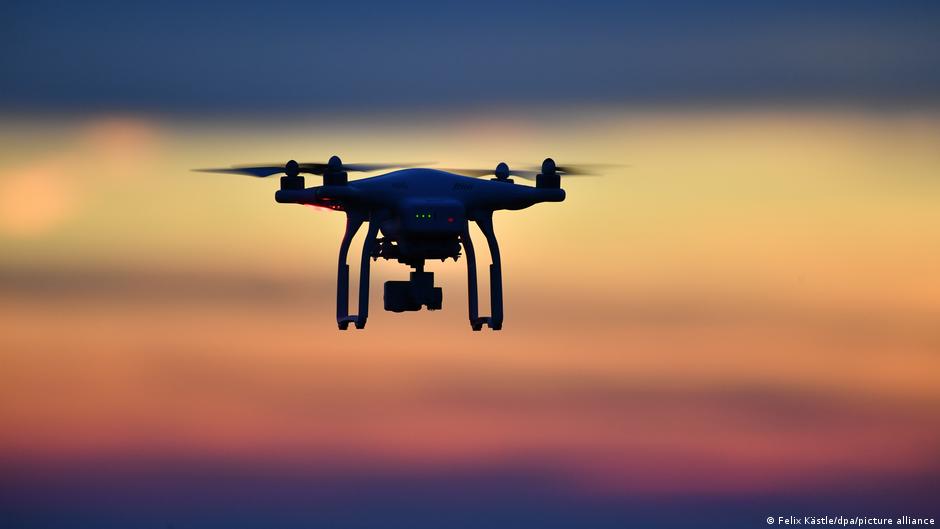

Germany Mobilizes Against Rising Drone Threat
Germany is grappling with an escalating security challenge posed by a surge in suspicious drone activity. This year alone, the nation has recorded over 1,000 instances of unidentified unmanned aerial vehicles (UAVs) being sighted, prompting significant disruptions and a concerted effort by authorities to bolster defenses.
The Federal Criminal Police Office (BKA) has characterized the situation as a “significant danger.” Holger Münch, the head of the BKA, revealed the alarming figures in recent comments, highlighting the growing concern among security agencies. While absolute certainty about the origin of every drone remains elusive, suspicions are leaning towards state actors aiming to destabilize Germany and sow seeds of uncertainty.
Disruptions at Major Airports and Military Sites
The presence of these drones has had a tangible impact on civilian air travel. Major German airports have experienced significant disruptions, leading to flight cancellations and considerable inconvenience for passengers.
- Munich Airport: Operations were temporarily halted on October 3, coinciding with the city’s renowned Oktoberfest festival. This suspension of air traffic control activities underscores the vulnerability of even high-profile events to such intrusions.
- Berlin Brandenburg Airport: In November, the airport was forced to suspend operations for nearly two hours due to the sighting of unidentified drones. This incident further illustrates the widespread nature of the problem.
Beyond civilian infrastructure, German military installations have also been targeted or affected by drone sightings.
- Gnoien Military Base: In a report by German news outlet Der Spiegel, four drones were reportedly spotted on October 13 at a military base in the northeastern town of Gnoien. Notably, Ukrainian soldiers were undergoing training at this facility at the time of the incident, adding a layer of geopolitical complexity to the event.
A Multi-pronged Approach to Counter-Drone Capabilities
In response to this mounting threat, German authorities are actively enhancing their counter-drone capabilities. A new, coordinated approach is being implemented to ensure a more rapid and effective response to drone incursions.
Establishment of a Joint Counter-Drone Center (GDAZ)
A significant step in this direction has been the opening of the Joint Counter-Drone Center (GDAZ) in Berlin. German Interior Minister Alexander Dobrindt inaugurated the facility, which is designed to centralize and coordinate federal and state resources dedicated to drone defense.
- The GDAZ operates on a 24/7 basis.
- It is tasked with responding swiftly and in a unified manner to security threats posed by drones.
- The center leverages the combined technical expertise of both federal and state governments.
- This collaboration aims to create a robust framework for continuous communication, joint assessments of the situation, and coordinated actions in drone defense.
Specialized Units and Advanced Technology
Beyond the central command center, specialized units are being deployed to provide on-site support during drone incidents. The Interior Minister has commissioned a dedicated drone defense unit to assist airports and other critical sites.
Furthermore, Germany’s Armed Forces, the Bundeswehr, are bolstering their arsenal with advanced technology. The military has placed orders for specialized anti-aircraft tanks. These systems are specifically designed to combat and neutralize swarms of drones, reflecting a proactive strategy to counter the evolving nature of aerial threats.
The ongoing drone incidents highlight a critical security challenge for Germany, necessitating a comprehensive and adaptive response from its government and defense forces. The deployment of new centers, specialized units, and advanced weaponry signals a firm commitment to safeguarding its airspace and national security.