
Identical Twins and an Impossible Paternity Puzzle: A Mother’s Dilemma
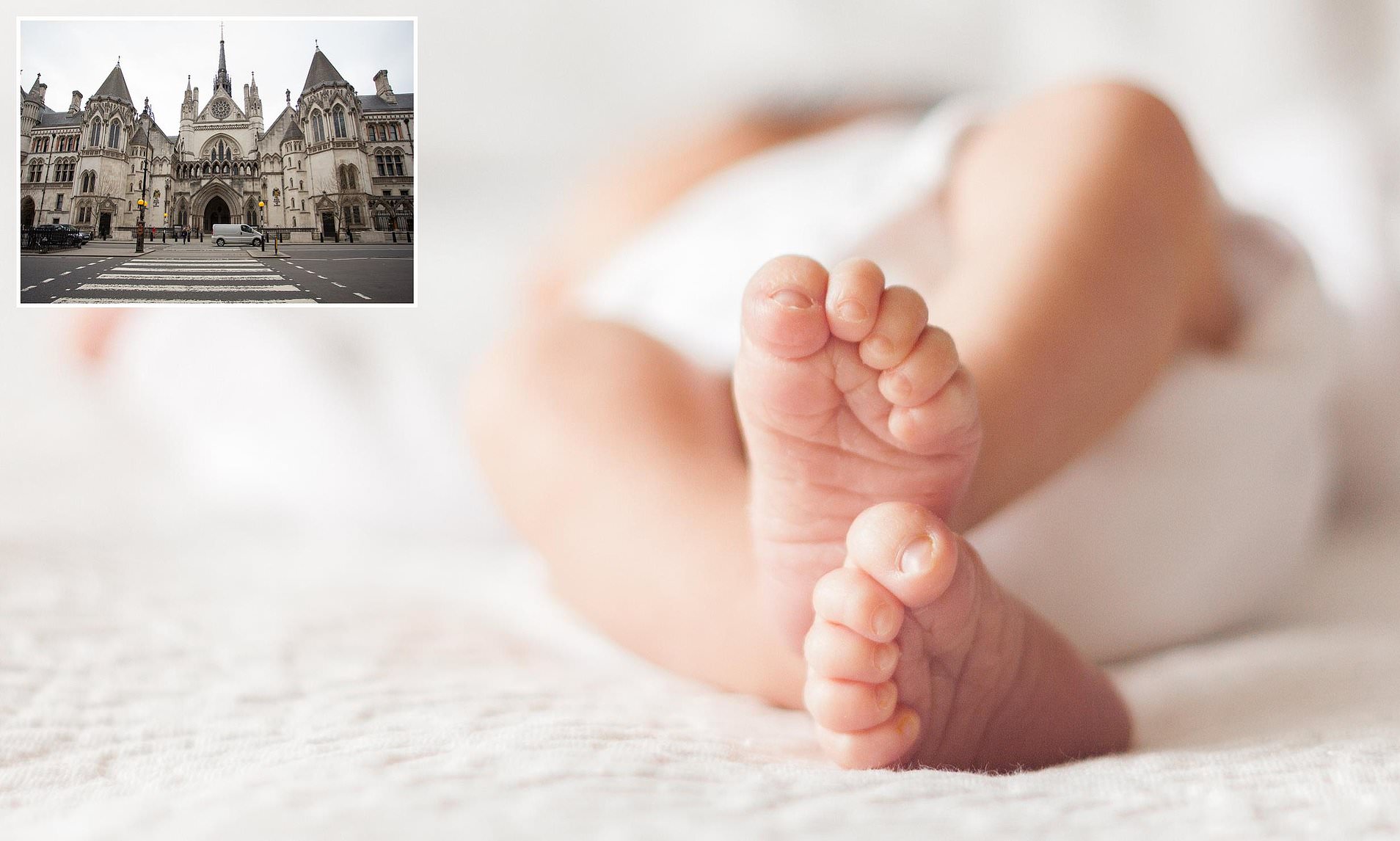
A baffling case, described as “highly unusual and possibly unique,” has landed before the Appeal Court, presenting a paternity quandary of unprecedented complexity. The heart of the matter lies with a mother who found herself in a sexual relationship with two identical twin brothers simultaneously. Now, she faces an insurmountable obstacle in definitively identifying the biological father of her daughter, as there remains a stark “50 per cent chance” it could be either sibling. This extraordinary situation has ignited debate on legal responsibility and the very definition of fatherhood.
The brothers, so remarkably alike that the mother initially struggled to differentiate them, reportedly began casual relationships with her separately in 2017, without the other’s knowledge. The woman gave birth to a daughter in 2018, who is now eight years old.
Court documents reveal a dramatic turn of events during the pregnancy. The twins discovered they were both involved with the same woman early on. By the time of her first scan at 12 weeks, text messages had emerged, with the brothers arguing over whose likelihood of being the father was greater. Crucially, both men had been intimate with the woman during the narrow four-day window in which conception is believed to have occurred.
While DNA paternity tests were conducted, a perplexing outcome ensued: both men registered a positive result, and each remains convinced he is the biological father. This unresolved paternity issue has, understandably, fractured the once-close bond between the brothers.
The Legal Labyrinth: Welfare and Birth Certificates
The anonymised details of this complex case surfaced when local authorities encountered significant legal hurdles while attempting to arrange the welfare of the child, referred to as ‘P’ throughout the proceedings.
Initially, the woman maintained a casual relationship with one of the twins, and he was subsequently listed as P’s biological father on her birth certificate. This designation automatically confers legal responsibility, granting him the authority to make critical decisions regarding her upbringing, including her residence and education.
However, this relationship eventually dissolved. When local authorities sought to obtain a child arrangement order for custody, they discovered that the paternity of the child was being contested by the other twin. This led to a fact-finding hearing in the family courts in 2024, tasked with the unenviable job of determining which twin was the likely father.
Presiding over the case, Judge Reardon found herself unable to reach a definitive ruling. The evidence presented indicated that either twin could, with equal probability, be P’s father. In her ruling, the judge noted, “They have both claimed her; and they are both pursuing this claim at considerable financial and personal cost, including a cost to their own relationship which, before this issue arose, was close.”
The matter has since escalated to the Court of Appeal. Legal representatives appointed on behalf of P challenged the family court’s decision, seeking to have the twin’s name removed from the birth certificate to eliminate any “ambiguity.” Such a removal would consequently nullify his parental rights.
The Science of Identical Twins and the Unbreakable DNA Link
Emma Hubbard, a senior associate at Hall Brown Family Law, highlighted the rarity of such circumstances. “The circumstances of this case are relatively unusual,” she stated. “I certainly can’t think of another one involving the same complications. Where no definite biological link can be proven, it means a child may grow up having only a mother with parental responsibility for them.”
Standard DNA paternity tests, while highly accurate in most scenarios, are inherently incapable of distinguishing between identical twins. These tests typically analyse specific regions of a father’s DNA and compare them to the child’s, usually confirming paternity with over 99.9 per cent certainty. However, identical twins originate from a single fertilised egg that splits early in development, meaning they share an almost identical genetic makeup.
The only scientifically viable method to differentiate between identical twins involves a comprehensive analysis of their entire DNA sequence, a process known as whole genome sequencing. This advanced technique can identify minute mutations that may have occurred after the egg divided.
Prohibitive Costs and the Future of Paternity
The court heard that such whole genome sequencing would incur costs in the region of £90,000, a sum considered prohibitive for the parties involved. Furthermore, even this sophisticated analysis might not yield a conclusive answer.
Professor James Ware, a specialist in cardiovascular and genomic medicine at Imperial College London, explained the genetic intricacies. “There is a window in which twins’ developing embryos can acquire a few mutations that distinguish them after the egg has split,” he elaborated. “That number can be very, very small – the average is five, but it can be up to 100 – among our three billion letters of DNA. Those mutations will only be passed on to a child if they are contained in sperm, so analysing their sperm might help distinguish between the men, although there are no guarantees.”
A similar, though legally resolved, case occurred in Brazil in 2019. A woman became pregnant after relations with one identical twin. When neither twin would accept responsibility, and DNA tests proved inconclusive, a judge mandated both brothers to contribute to child support.
In its recent judgment, the Appeal Court ruled that the twin currently listed on the birth certificate should remain. The court stated, “it is simply not possible to hold that [the twin] is not P’s father, indeed, there is a 50 per cent chance that he is.” However, the ruling also stipulated that an order should be made to remove his right to parental responsibility.
The judgment further acknowledged the long-term implications: “It is possible, indeed likely, that by the time P reaches maturity it may be possible for science to identify one father and exclude the other twin, but, for the coming time that cannot be done without very significant cost, and so her ‘truth’ is binary and not a single man. It is for [her mother] to determine how P is introduced to this truth over time.”
Sir Andrew McFarlane, President of the Family Division, presided over the case, which, according to Emma Hubbard, has brought clarity to the law concerning parental responsibility. “Over the years, courts have questioned whether someone can only really be a father with parental responsibility if there is a biological link to a child,” she remarked. “This judgement indeed means just that. If there is no biological connection, there can be no parental responsibility, regardless of whether someone is named on a birth certificate.”