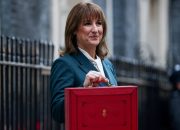


The Australian government’s revamped first-home buyer scheme, allowing purchases with a five percent deposit, is facing criticism amid concerns it may be exacerbating housing affordability issues. Critics argue the initiative is driving up prices and potentially shutting out the very demographic it intends to assist.
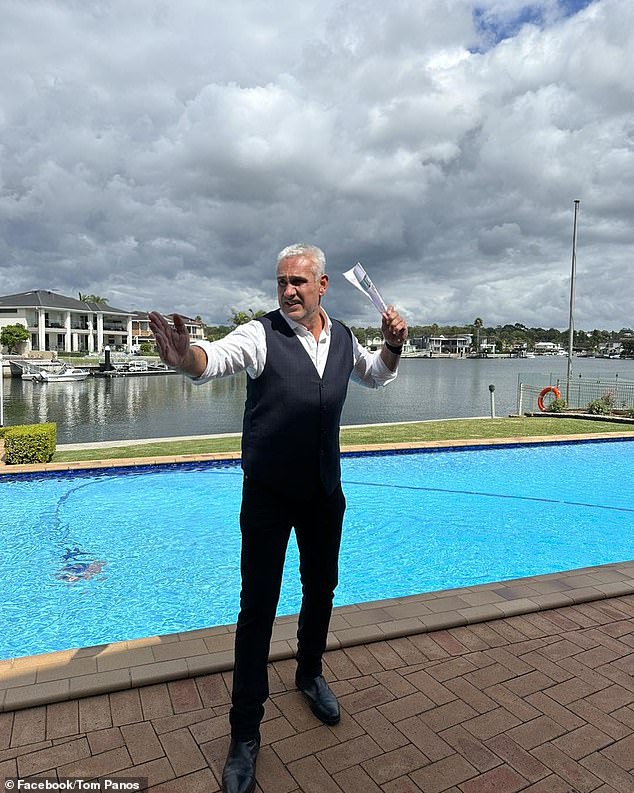
A prominent real estate expert, Tom Panos, has voiced strong opposition to the expanded scheme, labeling it “the perfect scheme to make housing unaffordable.” He contends that it injects further demand into a market already struggling with limited supply.
Panos explained, “I have been working in real estate for decades and I can tell you, I’ve seen this repeated time and time again. A stimulus comes in and it seduces the most vulnerable cohort of Australia – those that are fighting to get into a hot housing market. They think that they’re coming into the market with water to actually put that fire out, when in fact they’re coming in there with petrol.”
The updated scheme, implemented in October, enables first-time buyers to enter the market with a significantly reduced five percent deposit, with the government acting as a guarantor for a portion of the loan. This eliminates the need for lenders’ mortgage insurance and broadens eligibility by removing previous income restrictions and increasing property price thresholds. Properties eligible under the scheme can now reach values of up to $1.5 million in Sydney and $950,000 in Melbourne, with regional areas having lower caps.

Panos argues that the revisions have increased competition for lower-priced properties, particularly at auctions. “It makes the flames even higher, and more paddles means higher prices – and guess what – it’s in that under $1.5 million mark in Sydney and around the country. The five per cent deposit scheme has done one thing brilliantly, and that is it has brought more paddles to auction for the cheaper properties – and that has actually had the opposite effect to what they wanted to achieve with that scheme.”
Financial commentator Scott Pape has echoed these concerns, describing the scheme as a “dud policy” in his recent analysis. He cautioned against the risks associated with high leverage: “When you only put down five per cent, you’re highly leveraged. One unexpected cost, like skyrocketing strata fees, and you’re in financial quicksand.”
The five percent deposit scheme is one component of the government’s broader housing strategy, which also includes a $10 billion commitment to construct 100,000 new homes for first-time buyers.
Government projections estimated a modest 0.6 percent national price increase over six years as a result of the scheme. However, critics argue that this figure underestimates the true impact.
In the first month following the scheme’s launch, home prices experienced a 1.1 percent increase, the most rapid growth in two years. The most significant price gains were observed in the middle and lower tiers of the market.
While acknowledging the price increase coincided with the scheme’s introduction, CoreLogic noted that establishing a direct causal link is “difficult to establish.” They also stated, “It is also worth noting that it might be too soon for the full impact of the expanded scheme to show up in price growth, and the numbers are worth reviewing over time. Ultimately, the expansion of the five per cent deposit scheme is one of many factors influencing strong growth at the lower-to-middle end of the market.”
Between October and November, the scheme facilitated 11,841 guarantees, assisting nearly 19,000 Australians in purchasing homes with smaller deposits.
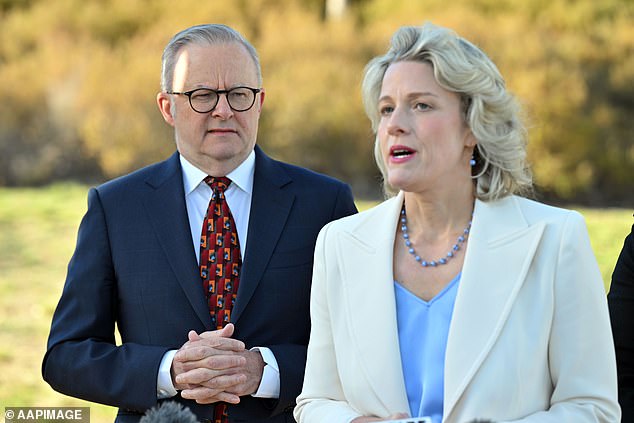
Housing Minister Clare O’Neil defended the scheme, stating it was progressing “squarely” in line with government predictions. “We know that Australians are doing it incredibly tough on housing so I’m happy that the Albanese Government has helped almost 19,000 Australians to buy a home since 1 October. This means more people paying off their own mortgage and not someone else’s.”
The opposition has also criticized the government’s decision to eliminate income tests for the scheme, arguing that taxpayers will be subsidizing wealthier first-time buyers. Shadow Housing Minister Andrew Bragg claimed the scheme now allows “billionaires or the children of billionaires” to access the guarantees.
“I think we’re getting to a point where Australia is becoming a ridiculous nation where the taxpayer is underwriting mortgage insurance schemes for extremely wealthy people,” he stated.
Bragg also challenged the government’s claim of a minimal impact on house prices, asserting that the government had “either misled Australians about the impacts of their debased scheme, or relied on modelling that is plainly flawed.”