
Escalating Border Conflict Displaces Hundreds of Thousands in Cambodia and Thailand
Renewed and intense border clashes between Cambodia and Thailand have led to a significant humanitarian crisis, with over half a million Cambodian citizens forced to flee their homes. The ongoing conflict, which reignited this month, involves heavy weaponry including tanks, drones, and artillery, resulting in a grim toll of at least 22 lives lost in Thailand and 19 in Cambodia, according to official reports.
The roots of this protracted dispute lie in the ambiguous colonial-era demarcation of the 800-kilometer (500-mile) shared border. This ambiguity is further complicated by the presence of ancient temple ruins situated precariously along the frontier, making them focal points for territorial claims and subsequent military engagement.
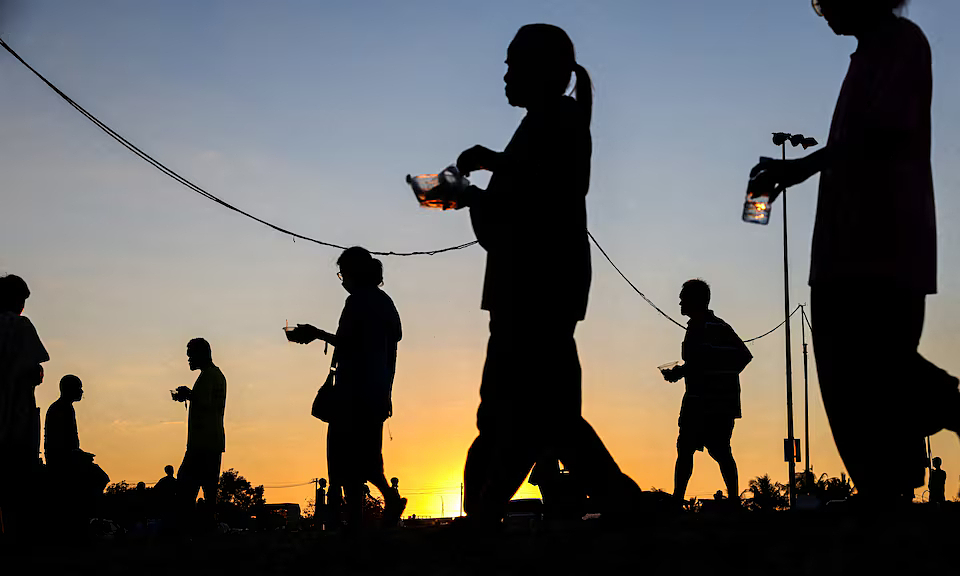
Cambodia’s Ministry of Interior issued a stark statement on Sunday, detailing the severity of the situation. “At present, more than half a million Cambodian people, including women and children, are suffering severe hardship due to forced displacement from their homes and schools to escape artillery shells, rockets, and aerial bombardments carried out by Thailand’s F-16 aircraft,” the ministry reported, putting the total number of evacuated individuals at a staggering 518,611.
Thailand has also reported substantial displacement, with approximately 400,000 people forced to leave their homes due to the resurgent border conflict. Both nations have engaged in a cycle of blame, accusing each other of initiating the latest hostilities and of targeting civilian populations. This pattern of conflict is not new; five days of intense clashes in July also resulted in dozens of casualties, highlighting the fragility of peace in the region.
Previous attempts at de-escalation, including a truce brokered by the United States, China, and Malaysia following the July fighting, proved to be short-lived. While a joint declaration between Thailand and Cambodia, supported by then-U.S. President Donald Trump in October, promised a renewed commitment to peace and new trade deals, it was soon suspended. Thailand cited an incident in November where its soldiers were wounded by landmines during border patrols, an accusation that Phnom Penh has vehemently denied.
Despite claims by former President Trump that he had resolved the conflict, Bangkok has refuted any recent ceasefire agreements. The current wave of fighting began on December 7th with a border skirmish, escalating into daily confrontations.
International efforts to mediate a lasting peace are underway. U.S. Secretary of State Marco Rubio expressed hope on Friday that a new ceasefire would be reached between Cambodia and Thailand imminently, potentially by Monday or Tuesday. In a significant diplomatic move, foreign ministers from ASEAN nations, including both Cambodia and Thailand, are scheduled to convene in Kuala Lumpur on Monday for talks aimed at forging a diplomatic resolution.
China has also intensified its diplomatic engagement, dispatching its special envoy for Asian affairs to both Cambodia and Thailand last week with the stated objective of “rebuilding peace.” Cambodia’s Ministry of Foreign Affairs confirmed that the Chinese envoy, Deng Xijun, met with Prime Minister Hun Manet in Phnom Penh on Saturday, where he urged for an immediate cessation of hostilities.
The ongoing military engagements have seen Thai forces continuing attacks since dawn, particularly along the border near the historically significant 900-year-old Preah Vihear temple. This region has been a flashpoint for conflict in the past.
Historical Context of the Border Dispute
The contested land adjacent to the UNESCO-listed Preah Vihear temple site has a troubled history. Military clashes occurred here in 2008, followed by several years of sporadic violence that claimed the lives of two dozen people. A pivotal United Nations court ruling in 2013 favored Cambodia, providing a period of relative stability that lasted over a decade. However, the current crisis erupted in May of this year with a new clash that resulted in the death of a Cambodian soldier, reigniting the long-standing territorial dispute and plunging the region back into conflict.
The humanitarian impact of this renewed fighting is immense, forcing a substantial portion of the Cambodian population to seek safety away from their homes and the destruction wrought by the ongoing hostilities. The international community is now focused on achieving a sustainable ceasefire and addressing the underlying territorial disputes to prevent further suffering and loss of life.