

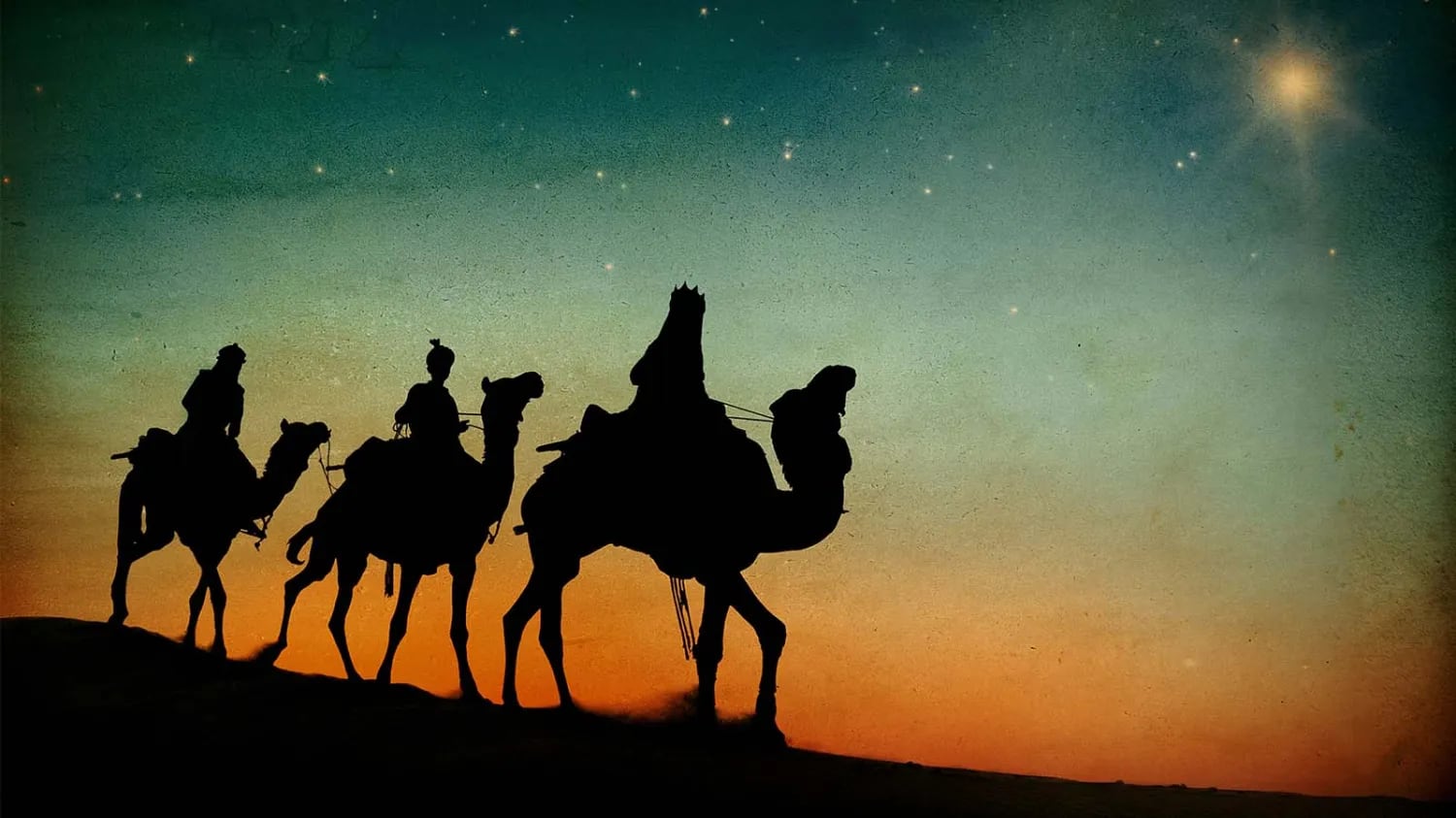
The New Testament’s Gospel of Matthew tells the story of magi from the East who, following a star that heralded the birth of the “King of the Jews,” arrived in Jerusalem. This guiding star then came to a halt, hovering over the location of the infant Jesus in Bethlehem, leading the magi to worship him.
However, for those outside the Christian faith, the notion of a celestial body pausing over a small village is often viewed as a myth. The “Star of Bethlehem” has been a subject of debate among astronomers for centuries, as they seek to understand the astronomical phenomenon that might explain the biblical account.
Recently, Mark Matney, a planetary scientist at NASA, presented a compelling argument in the Journal of the British Astronomical Association, suggesting a scientific explanation for the star’s unusual behavior. He proposes that the “Star of Bethlehem” could have been a comet that made a near-Earth approach approximately 2,000 years ago.

Matney’s research centers on a bright comet that was observed for more than 70 days, beginning in the spring of 5 BC, a record documented by the Han Dynasty court in ancient China. These historical observations were already known to astronomers and historians.
The “Astronomical Treatise” in Volume 26 of the “Book of Han” contains the following entry: “In the second month of the second year of Emperor Ai’s Jianping era, a comet appeared in the constellation Qiuxi and remained visible for over 70 days.”
According to Matney, “The second month of the second year of Jianping corresponds to March 9–April 6, 5 BC, which aligns precisely with the estimated timeframe of Jesus’ birth. The fact that it was visible for over 70 days suggests the object was exceptionally bright.”
The practice of dividing history into BC and AD based on Jesus’ birth was initiated in 525 AD by the Roman monk Dionysius Exiguus. Historians generally estimate Jesus’ birth to have occurred between 6–5 BC. This dating is supported by the historical record of Herod the Great, who, according to the Gospel of Matthew, ordered the massacre of infants under two years old after his meeting with the magi. Herod’s death is historically confirmed to have taken place in 4 BC.
Matney’s contribution lies in his application of modern analytical techniques to model orbits that correspond with the Chinese comet records. His research indicates that under certain trajectories, the comet could have passed remarkably close to Earth—within 380,000–400,000 kilometers. At that proximity, it would have appeared stationary in the sky for several hours when viewed from the ground.
He contends that if the comet approached as close as the distance between Earth and the Moon, “it would have been easily visible even during daytime and extraordinarily bright.” In his published paper, Matney references Comet Siding Spring, which passed within 141,000 kilometers of Mars on October 19, 2014, as an example. He notes that such close encounters, while infrequent, are indeed possible.
Matney’s reconstruction suggests the following scenario:
- Timing: The event occurred on a morning in June 5 BC in Judea.
- Perspective: To the magi, who were traveling south from the East, the comet would have appeared to “lead the way” from Jerusalem to Bethlehem.
- Appearance: Upon their arrival in Bethlehem, the comet might have seemed to “pause” overhead.
His calculations indicate that a comet passing so closely would have been bright enough to be seen even in the mid-morning. For several hours, the Earth’s rotation speed and the comet’s velocity could have coincided, creating the illusion that the comet had stopped—a phenomenon astronomers refer to as “temporary geosynchronous motion.”
The Bible does not specify the exact date of Jesus’ birth. In ancient Rome, December 25, the winter solstice marking the return of longer days, was celebrated as a solar festival. After Christianity became the state religion of the Roman Empire, this date was adopted as Christmas. However, most Eastern Orthodox Churches celebrate Christmas on January 7.
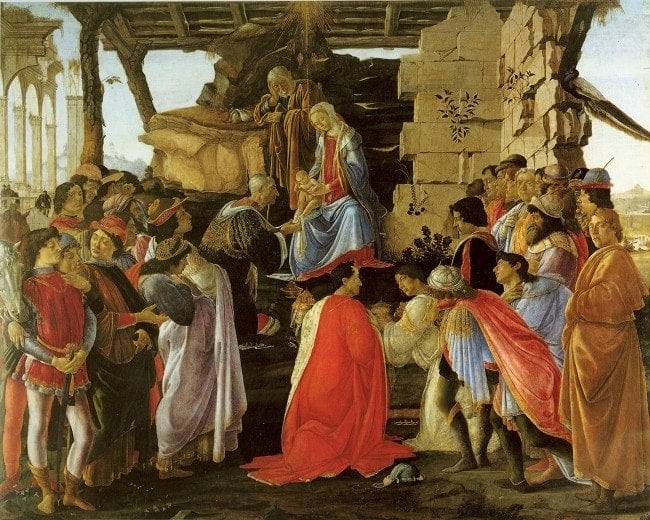
In his journal article, Matney writes, “This comet is the first real astronomical candidate to exhibit motion that superficially matches the description in Matthew.” The Chinese records, which note the comet’s visibility for several months, also align with Matthew’s implication that the magi observed the “star” for an extended period.
In ancient astrology, comets were often interpreted as omens of significant events, such as changes in power, royal births, or divine intervention. It was therefore plausible that astrologer-magi from the East would embark on a journey guided by such a comet.
It is important to note that this is not the definitive resolution to the mystery of the “Christmas Star.” The astronomical community has proposed over 400 different hypotheses.
Other proposed explanations include:
- A planetary conjunction: In the 17th century, Johannes Kepler suggested a great conjunction of Jupiter and Saturn in 7 BC as a possible explanation.
- A supernova: Others have proposed that the “Star of Bethlehem” was a supernova, a massive stellar explosion.
For many, the “Star of Bethlehem” remains a subject of faith and wonder, rather than a purely scientific phenomenon.