
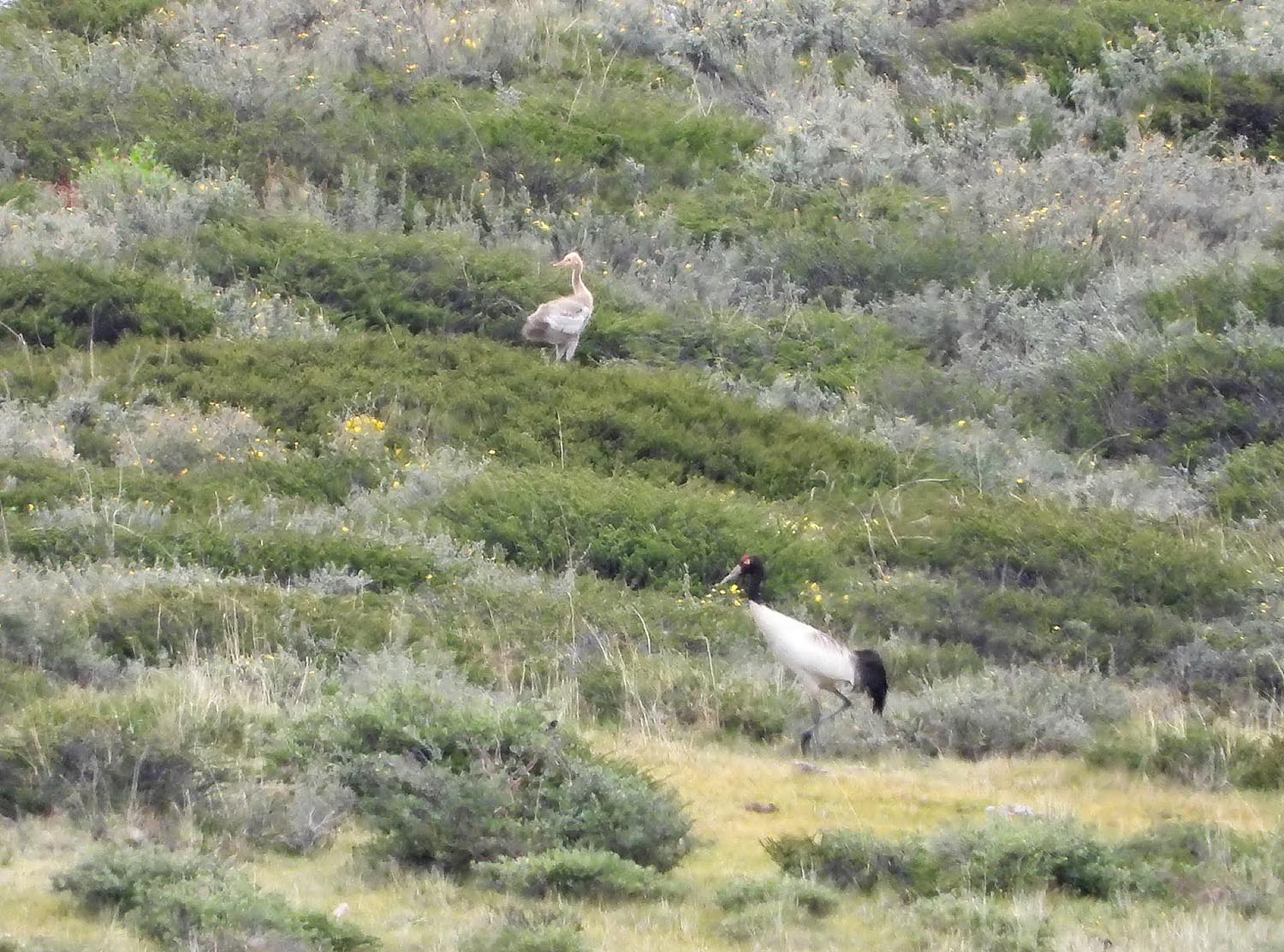
Nepal has achieved a significant milestone in ornithology with the first confirmed breeding of the black-necked crane (Grus nigricollis) within its borders. This globally rare species, known locally as Kalikantha Saras, was observed breeding in the high-altitude Limi valley of Humla district.
The observation, considered a major victory for bird conservation in Nepal, occurred along the Sakya stream plain in Namkha Rural Municipality. A pair of adult cranes was seen tending to a single chick, providing conclusive evidence of successful breeding.
“The presence of a chick with its parents definitively proves breeding, marking a historic first for the country. This is incredibly important for bird conservation efforts in Nepal,” stated Hem Sagar Baral, a senior ornithologist.
The groundbreaking discovery was made by a field team from Bird Conservation Nepal (BCN). The team, led by vulture conservation officer Ankit Bilas Joshi and senior research officer Kiran Gosai, spent approximately three weeks surveying the remote Ning stream, Dhyau stream, and Sakya stream basins. They camped at elevations of around 4,500 meters in challenging conditions.
Joshi recounted the experience: “We endured harsh conditions across three locations. After years of only observing adult cranes in Humla, witnessing a chick alongside its parents – almost twelve years after their consistent presence was first documented – was an unforgettable moment. This elevates the bird’s status in Nepal from a seasonal visitor to a breeding resident in specific areas.”
Researchers from BCN noted that the cranes had chosen a flat, open wetland near the stream, which is characteristic breeding habitat for this species across the Tibetan plateau. Black-necked cranes typically lay one or two eggs, and both parents share incubation responsibilities for approximately 30 to 32 days. The chick receives parental care until it is capable of flight, usually around 100 days.
The research team observed the chick over two consecutive days, carefully documenting its behavior and the surrounding habitat conditions without disturbing the birds. Joshi also announced plans for a follow-up research expedition in April 2026 to further investigate nesting success and seasonal migration patterns.
Characteristics of the Black-Necked Crane
The black-necked crane is a visually striking bird, characterized by:
- A black head and upper neck.
- A pale grey body.
- Drooping inner wing feathers.
These cranes typically nest near wetlands, marshes, and alpine streams, and they forage in fallow fields and highland meadows. In Nepal, they have historically been considered summer migrants, arriving around April to breed and departing by October. During the winter months, they migrate across the Himalayan region, often to Bhutan’s Bumthang valley, where local communities traditionally welcome them with special ceremonies.
Significance for Nepal’s Avian Diversity
According to ornithologist Krishna Prasad Bhusal, Nepal is home to four crane species:
- Sarus crane (Saras)
- Black-necked crane (Kalikantha Saras)
- Demoiselle crane (Karyangkurung)
- Common crane (Laxman Saras)
Previously, only the sarus crane had confirmed breeding records in Nepal, primarily in the Tarai region. “With the confirmation of black-necked crane breeding, Nepal now serves as a breeding ground for two crane species – a remarkable achievement for a relatively small country with such diverse ecological zones,” Bhusal explained. Sarus cranes remain residents of the lowlands, while black-necked cranes utilize high-altitude regions on a seasonal basis.
Threats to Black-Necked Crane Populations
Despite the successful breeding confirmation, conservationists caution that the black-necked crane faces growing threats, including:
- Habitat degradation
- Disturbance from infrastructure projects
- Overgrazing
- Climate change
These factors are gradually reducing the availability of suitable breeding grounds across the crane’s range. The International Union for Conservation of Nature (IUCN) currently classifies the species as near threatened.
The black-necked crane breeds in cold regions above 3,000 meters and emits a deep, resonant call that can be heard throughout valleys. They typically mate for life. Bird expert Hathan Chaudhary highlighted their captivating courtship dance, characterized by bowing, leaping, and wing-spreading. “Observing them is almost therapeutic and brings immense joy,” Chaudhary said.
Global Context and Conservation Imperatives
Globally, there are 15 crane species. India records five, and Nepal now officially hosts four, emphasizing its increasing ecological importance. Conservationists emphasize the urgent need to protect the breeding site in Humla, a mountainous district within Karnali Province. Safeguarding high-altitude habitats is crucial, not only for Nepal’s biodiversity but also for the entire Himalayan ecosystem. The successful breeding of the black-necked crane is viewed as both a triumph and a call to action for intensified conservation efforts.
Nepal has seen an increase in recorded bird species in recent years, solidifying its reputation as a haven for birdwatching. Ornithologist Baral notes that a total of 902 bird species have now been documented in Nepal.
The country’s diverse birdlife attracts a growing number of international tourists who visit specifically for birdwatching. Conservationists suggest that bird conservation can significantly contribute to overall tourism development within Nepal.
However, bird conservation faces numerous challenges across the nation, including:
- Habitat loss, primarily due to human encroachment
- Uncontrolled extraction of riverbed materials
- Food shortages
- Excessive fishing
- Bird hunting
- Chemical poisoning
- Land fragmentation
- Climate change
- Lack of awareness among local populations
These factors pose significant threats to bird survival and conservation efforts.