
South Korean Industries Chart a Mixed Course for 2026: Semiconductors and Displays Lead the Pack
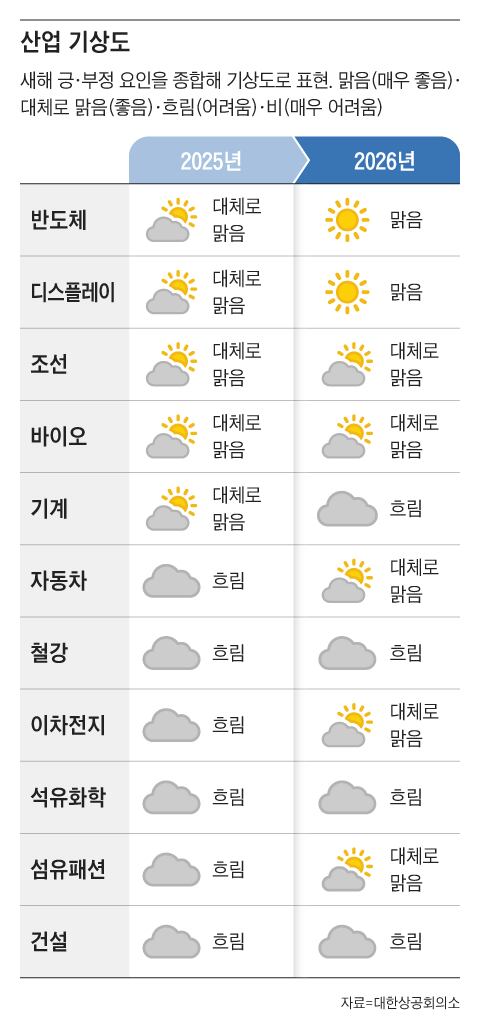
Seoul, South Korea – South Korea’s industrial landscape for 2026 is painted with a varied palette, according to a recent “Industrial Weather Map” released by the Korea Chamber of Commerce and Industry (KCCI). The comprehensive forecast, developed in collaboration with 11 major industry associations, categorizes sectors into four distinct outlooks: sunny (very good), mostly sunny (good), cloudy (difficult), and rain (very difficult). For 2026, the forecast indicates a bright outlook for key high-tech sectors, with semiconductors and displays predicted to experience “sunny” conditions, while batteries, biotech, automobiles, and shipbuilding are expected to enjoy “mostly sunny” weather. However, the petrochemical and steel industries are bracing for “cloudy” skies.
Semiconductors and Displays: Leading the Charge
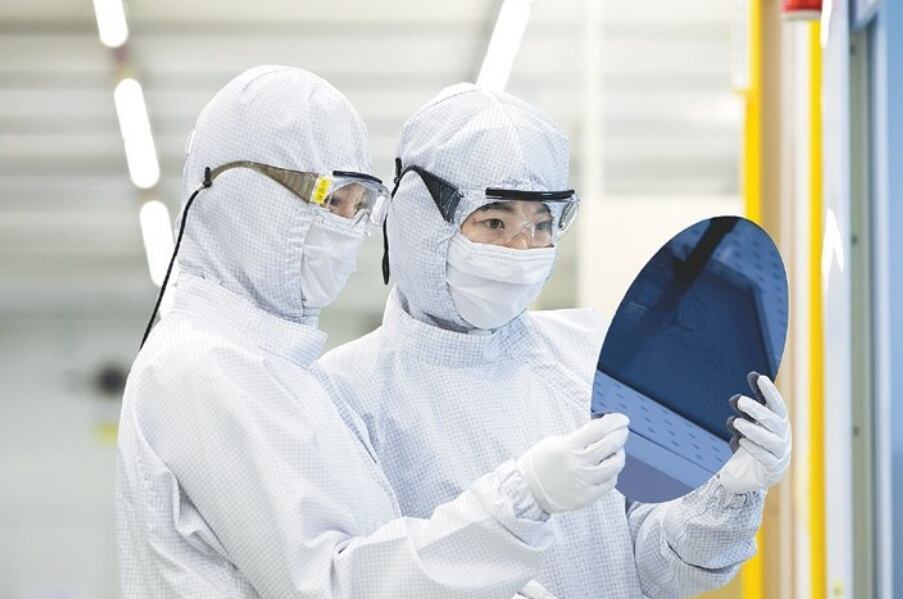
The semiconductor industry is poised for significant growth, with export projections showing a robust 9.1% increase from the current year, reaching an impressive US$180 billion. This optimism is fueled by the global surge in demand for artificial intelligence (AI) infrastructure. Major international technology firms are actively investing in AI, driving a heightened need for advanced, high-value semiconductors like High-Bandwidth Memory (HBM).
Similarly, the display sector is also anticipated to perform well, with exports expected to rise by 3.9% to US$17.67 billion next year. This growth is attributed to the ongoing standardization of specifications for AI-driven electronic devices and a growing preference for high-efficiency Organic Light-Emitting Diode (OLED) panels.
Mostly Sunny Skies Ahead for Key Growth Sectors
Beyond the top performers, several other crucial industries are set to experience favorable conditions.
Batteries (Secondary Batteries): The battery sector is forecast to see a 2.9% year-on-year increase in exports. This positive trend is largely driven by the escalating demand for Energy Storage Systems (ESS) to support the power needs of AI data centers.
- However, the industry faces potential headwinds, including reduced U.S. subsidies for electric vehicles and batteries, and the increasing market share of Chinese manufacturers.
Biotech: The biotechnology sector holds promising prospects for securing substantial outsourcing contracts. This outlook is bolstered by the full operational capacity of domestic Contract Development and Manufacturing Organization (CDMO) facilities and the anticipated benefits arising from the U.S. Biological Security Act.
Automobiles: The automotive industry is projected to achieve a 1.2% production increase, with 4.13 million units expected to be manufactured in 2026. This growth is attributed to the commencement of full operations at new domestic electric vehicle factories.
Shipbuilding: The shipbuilding sector is forecast to experience a significant 8.6% surge in exports, reaching US$33.92 billion next year. This strong performance is underpinned by sustained demand for liquefied natural gas (LNG) carriers and container ships.
Challenges on the Horizon for Petrochemicals and Steel
Despite the generally positive outlook for many sectors, the petrochemical and steel industries are facing considerable challenges.
Petrochemicals: The petrochemical industry is expected to endure a 6.1% decline in exports. This downturn is primarily attributed to an oversupply situation emanating from China and a downward trend in raw material prices, which are impacting profitability.
Steel: The steel industry has also been categorized under “cloudy” conditions. Similar to petrochemicals, oversupply from China is a major concern. Furthermore, intensified import restrictions imposed by the United States and the European Union are expected to impede export growth.
Lee Jong-myeong, head of the industry innovation division at the KCCI, emphasized the evolving global economic landscape. “China’s manufacturing competitiveness is expected to continue rising next year,” he stated. “It is crucial for the government to implement bold regulatory innovation experiments and establish an incentive system.” This sentiment highlights the need for proactive government support and strategic policy interventions to navigate the complexities of the international market and bolster the competitiveness of South Korean industries. The forecast serves as a critical guide for businesses and policymakers as they strategize for the upcoming year, identifying areas of strength to capitalize on and potential challenges to mitigate.