
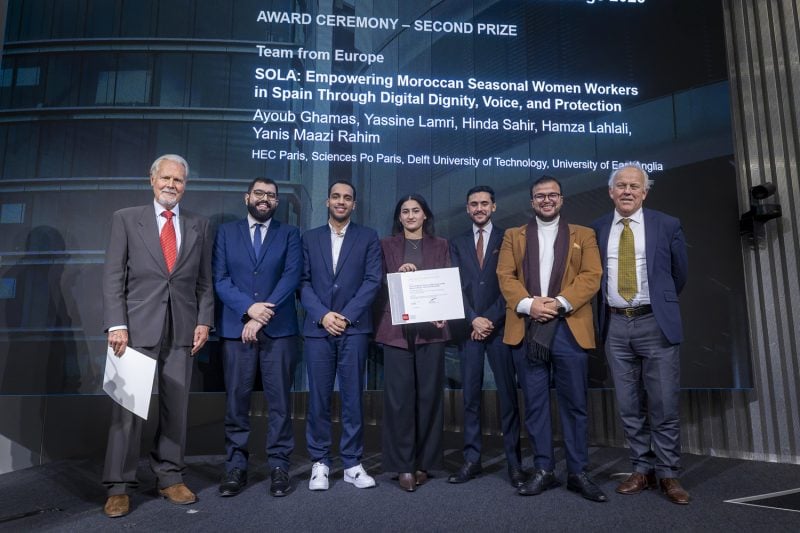
A team of five Moroccan students has been recognized for their innovative solution to protect Moroccan women working seasonally in Spain’s strawberry harvest. They secured second prize at the prestigious 2025 Geneva Challenge, a global competition that attracted over a thousand master’s and PhD students from nearly 100 countries. Their project, known as SOLA, is a digital platform designed to empower these vulnerable workers and address the systemic issues they face.
The backdrop to this innovation is the annual migration of over 15,000 Moroccan women to Spain for the strawberry harvest. These women are employed under a bilateral agreement established in 2001. However, the reality for many is far from ideal, with widespread reports of exploitation, inadequate housing, wage theft, and various forms of harassment.
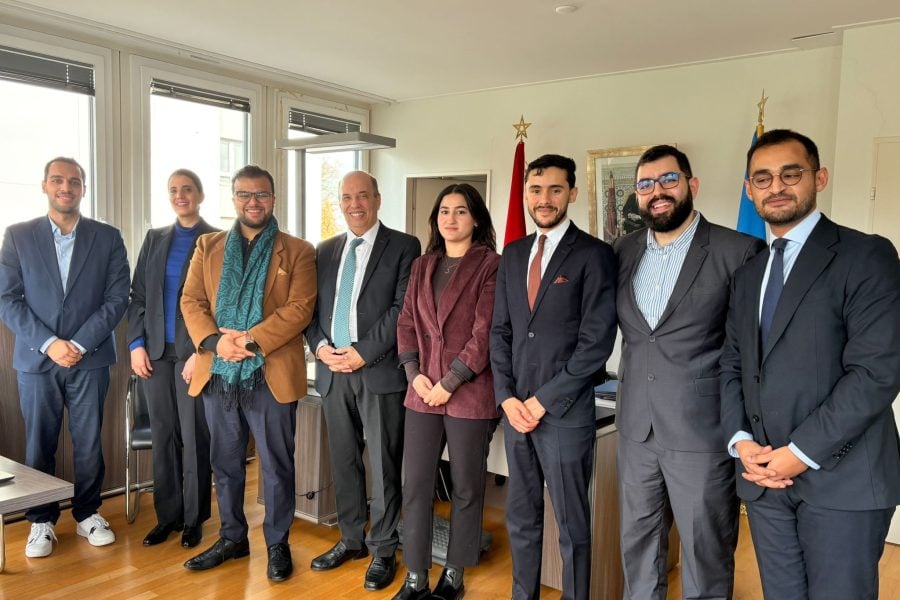
The SOLA platform, the brainchild of Hinda Sahir, Ayoub Ghamas, Hamza Lahlali, Yanis Maazi Rahim, and Yassine Lamri, aims to provide a safe and anonymous channel for Moroccan women to report abuses and access much-needed support. The initial focus is on Huelva, a region responsible for producing a significant portion (80%) of Spain’s strawberries.
The Problem: A Lack of Oversight and Systemic Abuse
According to Hinda Sahir, a key member of the student team, a significant problem is the lack of follow-up and monitoring once the initial employment agreements are signed. This absence of oversight allows exploitative practices to flourish.
For years, the voices of these women have struggled to be heard. The Andalusian Union of Workers has filed numerous complaints detailing persistent abuse, but these concerns are often dismissed by powerful farm lobby groups. Statistics paint a concerning picture: only a tiny fraction (0.1%) of contracts are fully respected in terms of legal rights. Many workers are forced to endure grueling 12-hour workdays, frequently without adequate breaks.
Vulnerabilities and Exploitation
Several factors contribute to the vulnerability of these Moroccan women:
Unreadable Contracts: Many are bound by contracts they cannot read, creating a state of dependency and making them susceptible to exploitation.
Substandard Housing: Housing conditions are often described as substandard, unsanitary, and overcrowded. The United Nations has characterized these conditions as “among the worst in the world.”
Health and Safety Risks: Workers face a range of health and safety risks, including harassment, coercion, threats, and deprivation.
Despite these challenges, only a small percentage (around 2%) of workers ever report abuses. This reluctance stems from a deeply ingrained culture of fear, allowing exploiters to operate with impunity.
SOLA: A Digital Solution for Empowerment
The student team behind SOLA recognized the need for a secure and accessible platform to address these issues. They consulted with various organizations, including Moroccan and Spanish associations, intergovernmental bodies like the International Organization for Migration (IOM), and several international NGOs. Their research highlighted that this issue is part of a larger crisis affecting over 100,000 non-EU seasonal workers each year, with similar cases reported in countries like Greece and Italy.
Hamza Lahlali emphasized the long-term vision for SOLA: “If we pilot this project successfully by 2026, we aim to scale it up in 2027 and expand to countries like Greece and Italy, not only to protect Moroccan women but women in general.”
Key Features of the SOLA Platform:
Accessibility: The platform is designed to be accessible to NGOs, seasonal workers, and the general public.
Voice-Based Interface: It features voice-based and dialect-specific interfaces to overcome literacy and language barriers. This allows women to report abuses and access support safely and easily. Ayoub Ghamas explained, “Women can simply record a voice note in Moroccan Darija, which will then be automatically transcribed and sent to the relevant NGOs.”
Digital Coordination Hub: The platform includes a hub where NGOs can track worker conditions and respond quickly to reported issues.
AI-Powered Predictions: An AI system predicts labor shortages and potential compliance risks, allowing for proactive intervention.
Dignity Map: The platform features a live Dignity Map that displays exploitation patterns, enabling NGOs to verify reports and take swift action to protect workers.
Ghamas highlighted the efficiency gains that SOLA offers: “What used to take four or five months can now be done in a matter of weeks, if not less.” He also emphasized the team’s commitment to building trust between workers and NGOs, ensuring that they receive help quickly and without fear of reprisal.
Phased Rollout Plan:
The team has developed a comprehensive plan for rolling out SOLA in four phases between 2025 and 2028:
Phase 1 (2025): Focuses on co-design workshops, prototyping, and establishing strong partnerships with key NGOs.
Phase 2: Represents the first real-world deployment of the SOLA platform within the Spain-Morocco corridor. This phase will focus on a limited number of farms and workers to allow for intensive monitoring and learning.
Phase 3: Scales SOLA across the Huelva region, integrates AI forecasting and the Dignity Index, and expands the network of NGOs and civil society partners.
Phase 4: Centers on internationalizing the tool, developing a Localization Kit to enable its replication in other European countries with similar seasonal worker programs.