

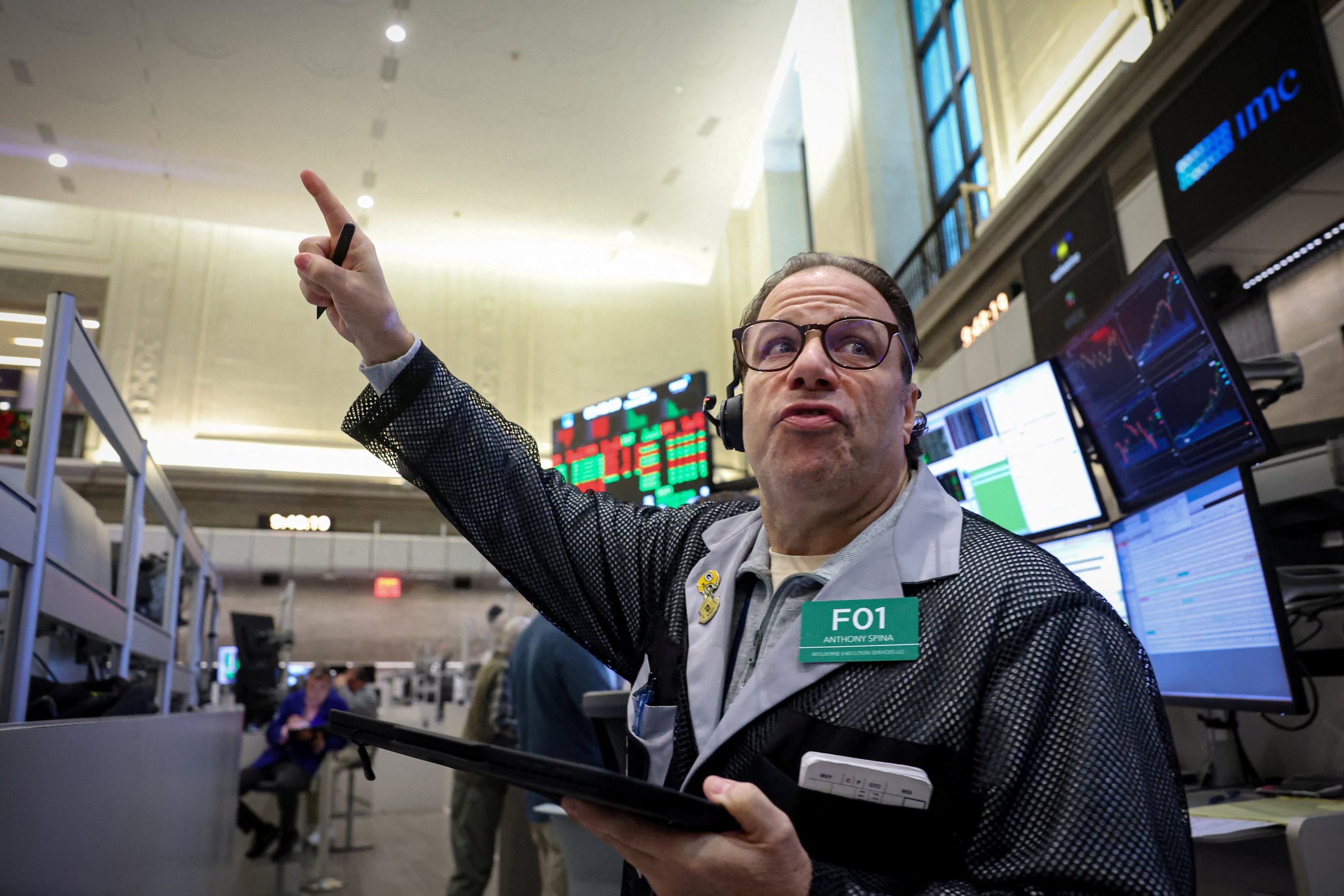
The increasing appetite for U.S. stocks among international investors is being viewed as a significant factor influencing exchange rates, a trend that shows no signs of abating. Data from the Korea Securities Depository reveals a dramatic increase in the value of U.S. stock holdings by domestic investors. At the close of 2023, these holdings stood at $68.023 billion, rising to $112.102 billion in 2024. By the 5th of this month, this figure had soared to $166.55 billion, representing an almost 2.4-fold increase in just two years. This rapid expansion of U.S. stocks within domestic investment portfolios means that the performance of the S&P 500, a key U.S. market index, has become a crucial determinant of returns for investors in other countries.
The S&P 500 has demonstrated consistent growth in recent years, with the exception of 2022. It saw substantial gains of 16.3% in 2020 and 26.9% in 2021. While it experienced a downturn of -19.4% in 2022, it rebounded strongly in 2023 and 2024, posting gains of 24.2% and 23.3% respectively. As of the 8th of this month, the index has climbed 16.4% this year, reaching 6,846.51. This strong performance has led several global investment banks (IBs) to suggest the possibility of a continued bull market in the coming year.
Factors Driving the Optimism: AI, Policy, and Profitability
Several factors are contributing to the optimistic outlook for the S&P 500:
- AI Investment: Investment in Artificial Intelligence (AI) is seen as a major catalyst for growth.
- Support Policies: Government support policies are expected to bolster the economy.
- Profit Improvement: Corporate profitability is projected to improve, driven by these factors.
Oppenheimer, a financial services firm, has issued the most bullish forecast among major IBs, predicting the S&P 500 will reach 8,100 next year. This target implies an additional 18% upside from the closing price on the 8th. Oppenheimer attributes this optimistic outlook to the “unexpected resilience” of the U.S. economy and the strength of corporate earnings. The firm notes that corporate earnings have consistently exceeded market expectations throughout the year, and despite weak consumer sentiment indicators, actual sales data remains robust. The Federal Reserve’s anticipated shift toward rate cuts, coupled with government fiscal expansion and increased investments in innovation, particularly in AI, are expected to drive corporate profit improvements through 2026. Oppenheimer recommends increasing exposure to the IT, consumer discretionary, and industrial sectors, arguing that “the combination of innovation and profit growth will drive the bull market.”
Morgan Stanley and Wells Fargo, which have set targets of 7,800 for the S&P 500, also anticipate a bullish market, citing policy improvements and profit growth driven by the expansion of AI. Morgan Stanley predicts that the “U.S. exceptionalism” of corporate outperformance will continue under a unique policy environment characterized by simultaneous fiscal, monetary, and regulatory easing. Wells Fargo similarly believes that increased household assets and a recovery in consumption will support corporate earnings.
UBS, with a target of 7,500, emphasizes that “corporate earnings will be the main driver of S&P 500 gains next year.” HSBC projects that “competition in AI infrastructure investments will lead the market next year, potentially extending a long-term upward trend similar to the early dot-com era of the 1990s.” JPMorgan has set a base scenario target of 7,500 but acknowledges the possibility of a more bullish scenario reaching 8,000, depending on the extent of rate cuts and the speed of AI-driven productivity improvements.
Potential Headwinds: Valuation and Elections
Despite the prevailing optimism, some institutions are concerned about high valuations as a potential obstacle. Goldman Sachs, which expects the index to reach 7,200–7,500, is taking a more cautious approach, stating that “while there is room for gains, the pace will be limited due to high valuations.” The firm explains that while AI investment expansion and strong earnings could support an upward trend, the current high price multiples could constrain future gains. Goldman Sachs believes that “future index gains are likely to be limited to earnings growth rather than multiple expansion” and notes that uncertainty remains regarding whether rate cut expectations will drive a strong rally.
Bank of America (BoA) has set the lowest target among major IBs, at 7,100, citing a slowdown in share buybacks by tech companies due to increased investments in AI and data centers, as well as reduced market liquidity resulting from the Federal Reserve’s balance sheet reduction.
The fact that 2026 is a U.S. midterm election year is also being considered as a potential source of volatility. According to Yahoo Finance, Sam Stovall, a strategist at investment research firm CFRA, points out that “since 1946, the S&P 500 has recorded an average maximum drawdown of 18% from its yearly high during midterm election years, making it the most volatile period in a four-year cycle.”