

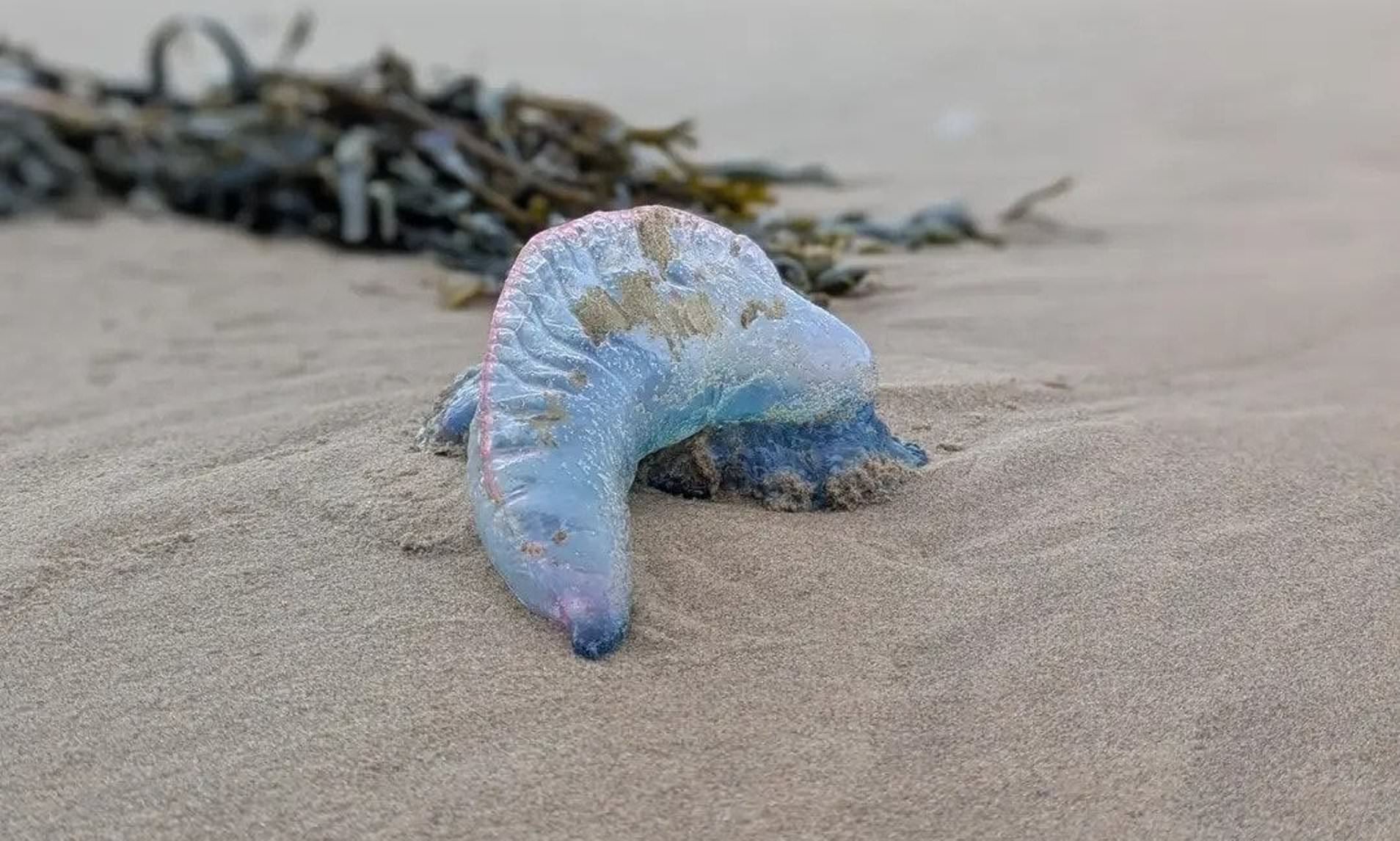
Urgent Warning Issued for Portuguese Man O’ War Sightings on Welsh Beach
A recent alert has been issued by the Port Talbot Coastguard following multiple sightings of Portuguese Man O’ War on Aberavon Beach in Wales. These creatures, often referred to as “floating terrors,” have raised concerns among local authorities and beachgoers alike.
The public is being urged to remain cautious and avoid any contact with these marine organisms. Despite their jellyfish-like appearance, Portuguese Man O’ War are not actually jellyfish. They are siphonophores, which are colonial organisms composed of many specialized individuals working together as a single entity.
These creatures are known for their translucent, balloon-like bodies and long, trailing tentacles. While they may appear beautiful, they are extremely dangerous. Their tentacles can deliver a painful sting that results in red welts, blisters, and, in severe cases, fever, shock, or complications affecting the heart and lungs.
Although fatalities are rare, the venom of the Portuguese Man O’ War can cause serious health issues, particularly in individuals with allergies or pre-existing cardiovascular conditions. Even after the organism has died, its tentacles remain capable of stinging, making dead specimens just as hazardous as live ones.
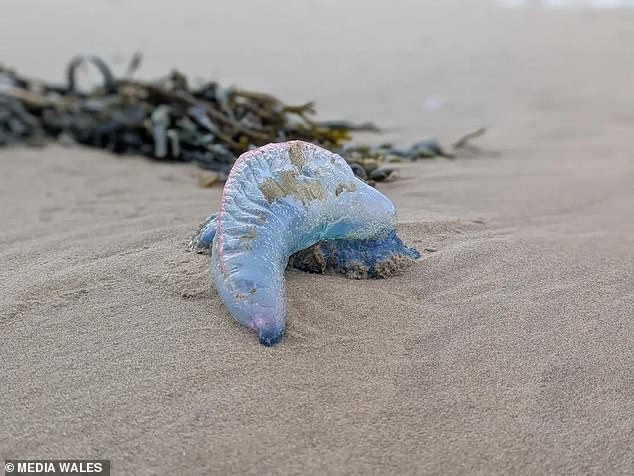
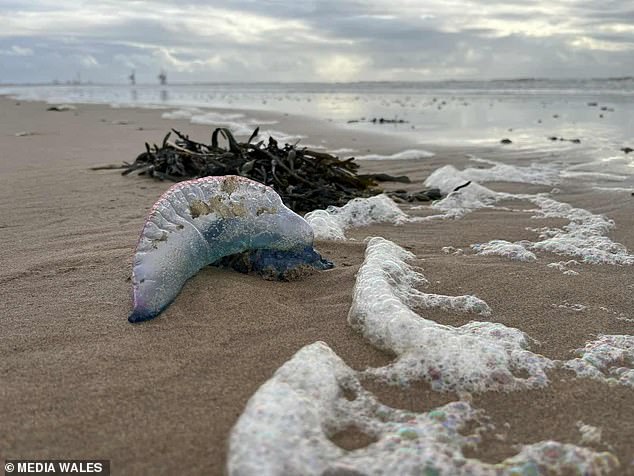
A spokesperson from the Port Talbot Coastguard emphasized the importance of vigilance: “We’re urging everyone visiting Aberavon Beach to stay vigilant. Do not touch these creatures, even if they appear dead, as their tentacles can still deliver a painful sting.”
In the event of a sting, the Coastguard advises the following steps:
- Rinse the affected area with seawater—not fresh water.
- Carefully remove any tentacles using a credit card or similar object.
- Immerse the area in water as hot as can be tolerated for at least 30 minutes to help neutralize toxins.
- Seek medical advice by contacting HM Coastguard or a doctor.
For coastal emergencies, individuals are encouraged to call 999 and request assistance from the Coastguard.
The Coastguard has also confirmed that they will not be removing the creature from the beach, as it may naturally return to sea with the tide. This is the usual procedure in such cases.
This warning comes after an increase in sightings of the Portuguese Man O’ War. In September, the species was also reported along the Pembrokeshire coast. Photographer Gareth Davies captured an image of the creature during a visit to Freshwater West beach. His sighting occurred shortly after several reports of the species were made along the Gwynedd and Anglesey coastlines.
Understanding the Dangers of Portuguese Man O’ War
Despite their striking appearance, Portuguese Man O’ War pose a real threat to those who encounter them. Their ability to sting even after death highlights the need for caution. Beachgoers should be aware of their surroundings and avoid any contact with unfamiliar marine life.
As more sightings are reported, it is essential for the public to stay informed and follow safety guidelines. The presence of these creatures on popular beaches underscores the importance of respecting the natural environment and taking necessary precautions.
Authorities continue to monitor the situation and provide updates to ensure the safety of all visitors. With increased awareness and adherence to safety protocols, the risk posed by these dangerous sea creatures can be minimized.