
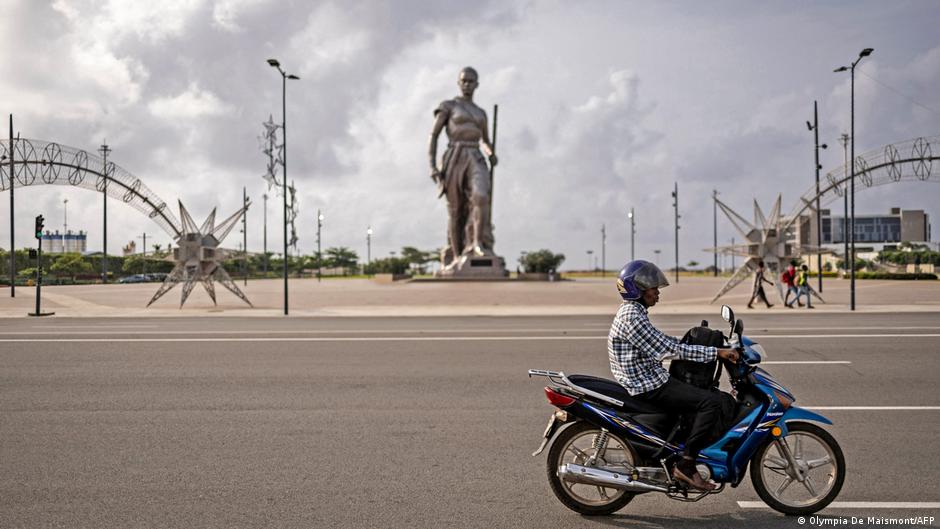
The government of Benin has confirmed that a recent coup attempt was thwarted with the assistance of foreign military intervention, resulting in casualties on both sides. The leader of the attempted coup, however, remains at large.
According to Secretary General Edouard Ouin-Ouro, the mutiny was orchestrated by “a small group of soldiers” with the aim of removing the President from office, subjugating state institutions, and challenging the established order. Their initial strategy involved neutralizing or kidnapping key military figures, including army chief-of-staff General Abou Issa and National Guard chief-of-staff Faizou Gomina, who were abducted from the Togbin military base.
Key Events of the Coup Attempt:
Abduction of Military Leaders: Generals Abou Issa and Faizou Gomina were initially abducted but later released in Tchaourou, a city located over 350 kilometers from Cotonou.
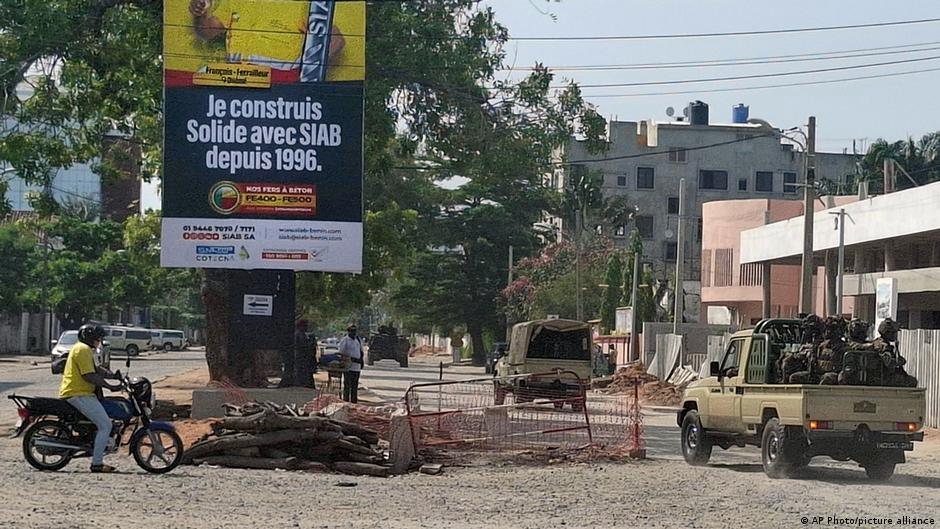
Military Response: The army responded by surrounding the Togbin base and launching “targeted, surgical airstrikes” designed to minimize risks to surrounding residential areas.
As of Monday, at least 14 individuals have been apprehended in connection with the attempted uprising. The whereabouts of Lieutenant Colonel Pascal Tigri, the alleged coup leader and a former member of President Talon’s security detail, remain unknown. The fate of several hostages also remains unclear.
President Talon, in a statement made on Sunday, condemned the coup as a “senseless adventure” and vowed to bring the mutineers to justice while ensuring the safety of the hostages. The identities and exact number of hostages have not been disclosed, although it is believed that some are senior military officers.
Timeline of Events:
Sunday Morning: “Violent clashes” erupted between army mutineers and the Republican Guard near President Talon’s residence in Cotonou. Reports indicate that President Talon personally witnessed the fighting.
Fatalities: Among the casualties was the wife of General Bertin Bada, the president’s military chief-of-staff, who was himself fatally wounded in an earlier attack.
Television Broadcast: Rebels identifying themselves as the Military Committee for Refoundation (Comité militaire pour la refondation), or CMR, led by Lieutenant Colonel Tigri, seized control of the national television station. They broadcasted a message announcing President Talon’s removal, the dissolution of the government, and the suspension of state institutions.
International Intervention and Regional Implications
The coup was ultimately suppressed by Beninese troops supported by air and ground forces from Nigeria, who intervened as part of an Economic Community of West African States (ECOWAS) operation. Forces from Ghana, Ivory Coast, and Sierra Leone also participated in the ECOWAS response.
Nigeria and ECOWAS had not intervened in a member state since 2017, when they deployed troops to Gambia to enforce the transfer of power following President Yahya Jammeh’s election defeat. The recent coups in Mali, Burkina Faso, Chad, Guinea, and Gabon did not trigger similar interventions, leading to criticism of ECOWAS for perceived inconsistencies in its approach.
Oluwole Ojewale, a senior security researcher at the Institute for Security Studies in Dakar, emphasized the significance of the Benin coup. “The coup in Benin is one too many,” Ojewale stated. “Nigeria cannot afford to be encircled by hostile governments.” The intervention highlights the regional concerns about stability and the potential for spillover effects from political instability in neighboring countries.