
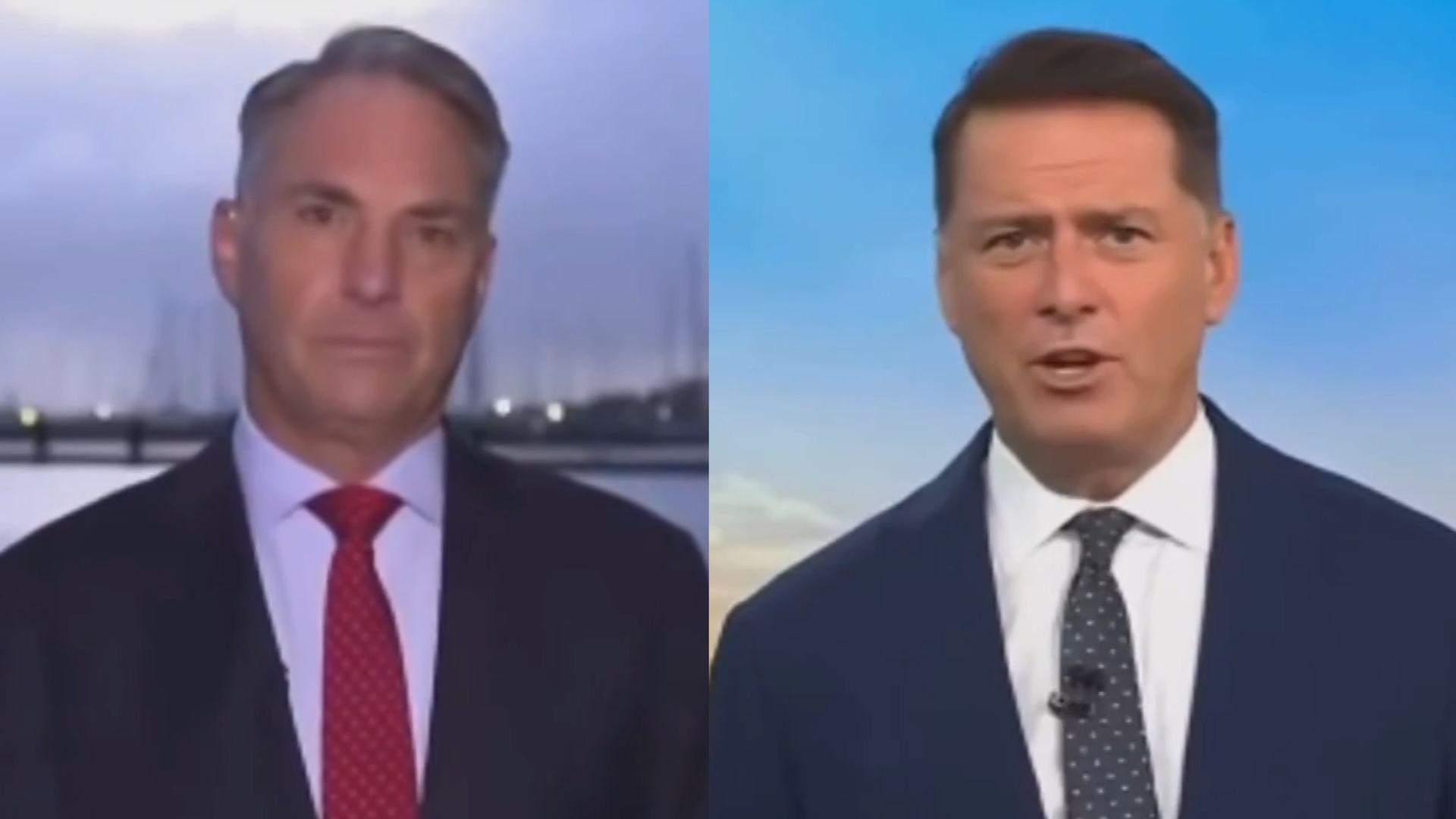
Sky News host Rita Panahi has offered a sharp critique of an interview featuring Deputy Prime Minister Richard Marles, suggesting the exchange with Karl Stefanovic highlighted a lack of confidence in the government’s messaging. Panahi’s commentary, delivered on Sky News, focused on what she perceived as Marles’s struggle to convey a message of assured leadership and control.
“Richard Marles, let’s see him just struggling in this interview, with Karl Stefanovic,” Ms Panahi remarked, implying the Deputy Prime Minister appeared less than convincing. She went on to quote Marles’s apparent assurances during the interview, which she sarcastically characterised as “We are in great hands, nothing to worry about, they’ve got it all under control.” Panahi’s delivery suggested she found these statements unconvincing and perhaps even a sign of underlying weakness.
“It’s going to be hard to beat that,” she concluded, her tone suggesting that the perceived lack of conviction in Marles’s words would be a significant hurdle for the government to overcome in terms of public perception. This assessment points to a broader concern about the government’s ability to effectively communicate its agenda and reassure the Australian public during challenging times.
The Nuances of Political Communication
The effectiveness of political communication is a complex and ever-evolving field. It’s not simply about delivering facts or policy details; it’s about crafting a narrative that resonates with voters, instils confidence, and projects an image of capable leadership. In Australia, as in many democracies, the media plays a crucial role in shaping public perception of politicians and their messages. Interviews, particularly those conducted by prominent media personalities, can become significant moments where a politician’s communication style is put under the spotlight.
Rita Panahi’s commentary, while a specific reaction to one interview, touches upon broader themes in political discourse:
- Perceived Competence: Voters often look for signs of competence and control from their leaders. Any perceived faltering or hesitation can be amplified by media scrutiny, leading to questions about the government’s overall grip on important issues.
- Messaging Clarity: A clear, consistent, and confident message is vital for any government. When this message appears muddled or unconvincing, it can create an impression of disarray or a lack of preparedness.
- Media Dynamics: The relationship between politicians and the media is a delicate dance. Interviewers often aim to probe and challenge, while politicians strive to stay on message and project authority. The outcome of such an exchange can be heavily influenced by the chemistry, the preparation of both parties, and the broader political context.
- Public Trust: Ultimately, effective political communication is about building and maintaining public trust. When trust erodes, it becomes significantly harder for a government to implement its policies and gain public support.
The Role of Media Commentary
Commentators like Rita Panahi play a significant role in interpreting and framing these political moments for the public. Their analysis can influence how viewers perceive an interview and, by extension, the politicians involved. While such commentary can offer valuable insights, it’s also important for audiences to consider the commentator’s own perspective and potential biases.
The exchange between Deputy Prime Minister Richard Marles and Karl Stefanovic, as highlighted by Panahi, underscores the ongoing importance of strong communication skills in the political arena. The ability to articulate a vision, address concerns with clarity, and project an image of steady leadership remains a critical factor in a government’s success and its ability to connect with the electorate. The public’s perception of competence, often shaped by these media interactions, can have a tangible impact on political fortunes.