
Nepal’s Anti-Graft Body Charges 55 Individuals, Chinese Company in Pokhara Airport Scandal
Nepal’s Commission for the Investigation of Abuse of Authority (CIAA), the nation’s constitutional anti-corruption agency, has filed a corruption case against 55 individuals and one Chinese company concerning irregularities in the construction of Pokhara International Airport. The charges, filed on Sunday, involve a significant inflation of project costs and violations of public procurement regulations.
The individuals facing charges include five former ministers, ten former secretaries, and other staff members. The CIAA alleges that these officials, along with the implicated Chinese company, engaged in a deliberate scheme to inflate the airport’s approved cost estimate. The charge sheet, submitted to the Special Court, accuses the defendants of “revising the approved cost estimate of the airport with malicious intent, inflating the estimate abnormally, and making excessive payments accordingly.”
The alleged inflation amounts to $74.34 million, making it the largest corruption case related to a public procurement process ever brought before the court. The CIAA’s intervention has been welcomed, though some observers note that it comes after a considerable delay.
The charges follow an earlier parliamentary subcommittee investigation initiated by the previous government. This investigation was spurred by growing concerns surrounding the airport’s construction. A sub-panel within the Public Accounts Committee of the House of Representatives conducted a thorough examination of documents, contracts, expenditures, and the physical condition of the airport. Their final report, released in April 2025, highlighted numerous issues, including:
Inflated costs for transporting materials: The cost of transporting soil and pebbles to the construction site was found to be artificially inflated.
Substandard runway elevation: The airport’s runway elevation was determined to be lower than the specified requirements.
Improper tax exemptions: The contractor received tax exemptions totaling Rs2.2 billion, which are now being questioned.
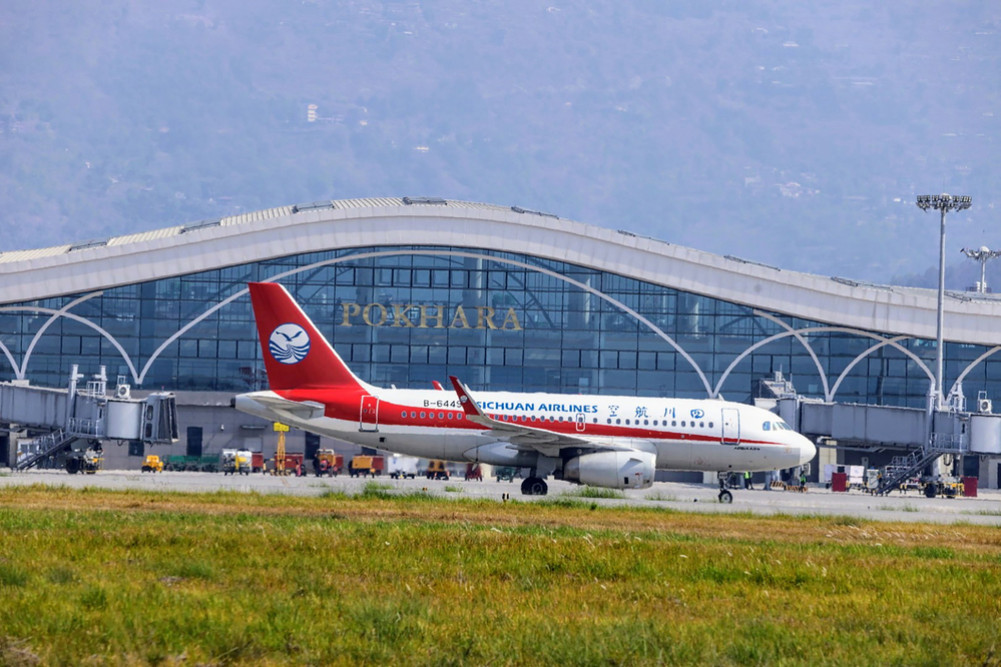
Despite beginning operations in January 2023, the airport’s flawed design and construction have limited its functionality. Currently, it primarily serves domestic carriers, with only a small number of chartered international flights utilizing the facility.
Corruption within Nepal’s civil aviation sector has long been a concern. The industry faces not only safety challenges but also regulatory deficiencies. The Civil Aviation Authority of Nepal (CAAN) has been criticized for operating with a conflict of interest, as it serves as both the service provider and the regulator, a dual role that benefits a select group of officials.
Recent events have further highlighted these issues. Last week, the CIAA detained Pradeep Adhikari, the director general of CAAN, due to his alleged involvement in irregularities during the construction of a heliport in Nalinchok, Bhaktapur. Adhikari is now also implicated in the Pokhara airport case.
The compromised aviation standards resulting from these irregularities have significant economic consequences. Nepali flag carriers remain barred from entering European Union airspace due to safety concerns. Despite these issues, successive governments have been hesitant to investigate and prosecute those responsible.
The interim government’s decision to pursue this case, despite its limited time in office and primary focus on holding elections, has been praised as a positive step. It aligns with the anti-corruption sentiments expressed during the September Gen Z protests, which aimed to dismantle corruption within public sectors.
To ensure lasting change, there is a call for sustained pressure on future governments to continue these investigations and prosecutions to their conclusion. Furthermore, many are advocating for a more comprehensive investigation that extends beyond ministers to include successive prime ministers. The argument is that corruption on this scale would not be possible without their knowledge and tacit approval.
Only through a thorough investigation and prosecution of all individuals involved in high-level corruption, starting from the top of the decision-making chain, can Nepal’s aviation sector truly improve and regain international credibility.