
Reform UK’s Local Election Launch Marred by Protests and Heckling
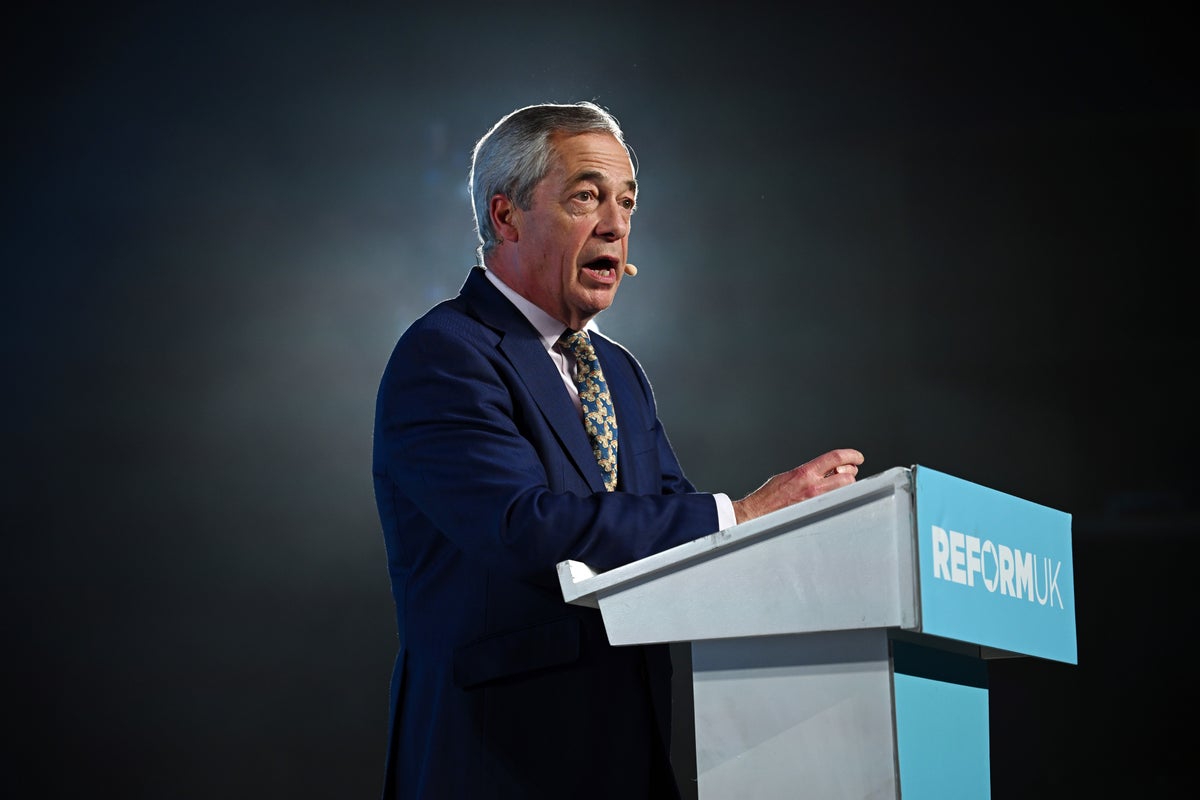
Nigel Farage’s recent launch of Reform UK’s local election campaign in London was far from a smooth affair, as the party leader faced significant heckling and protests from attendees and the wider public. The event, held at Fairfield Halls in Croydon on Saturday, 28 March, saw Farage’s speech repeatedly interrupted by members of the crowd, highlighting a palpable opposition to his political message.
In a moment that underscored the disruptive atmosphere, a custom-made “boring” graphic was projected onto the screen behind Farage. This visual gag was a direct response to the constant interruptions, mirroring his common retort to hecklers. “Oh, we’ve got a screamer,” he remarked to the audience, attempting to maintain composure amidst the disarray.
Nigel Farage was repeatedly heckled as Reform UK launched their local election campaign in London.
Speaking at the event in Fairfield Halls, Croydon on Saturday (28 March), the party leader’s speech was interrupted multiple times by members of the crowd.
A custom-made “boring” graphic then appeared on the screen behind the MP, echoing his usual reply to hecklers. “Oh, we’ve got a screamer”, he told the audience.
The campaign launch’s disruption coincided with a massive demonstration taking place across London on the very same day. An estimated half a million people took to the streets to voice their opposition to far-right politics. Many carried placards that directly addressed Farage and his party, with one particularly pointed message reading, “Don’t let Farage and Reform divide the country.” This stark contrast in public sentiment, with a significant portion of the city actively protesting the ideology Reform UK represents, paints a challenging picture for the party’s electoral ambitions.
The broader political climate in the UK continues to be a subject of intense debate. Reform UK, formerly the Brexit Party, has positioned itself as a vehicle for a particular brand of populist conservatism, often focusing on issues such as immigration, national sovereignty, and a critique of established political norms. However, this approach has also drawn considerable criticism, with opponents arguing that the party’s rhetoric can be divisive and harmful to social cohesion.
The local elections represent a crucial test for Reform UK. While the party has garnered attention and some electoral success in national polls and European elections in the past, translating this into tangible wins at the local level has historically been a more significant challenge for newer political movements. The campaign launch’s turbulent beginning suggests that they may face an uphill battle in convincing local communities to endorse their candidates.
Beyond the immediate political theatre, the events of the day also speak to a broader societal division. The large-scale protest highlights a significant segment of the population deeply concerned about the direction of political discourse and the potential impact of parties like Reform UK. This underscores the complex and often polarized nature of contemporary British politics.
The challenges faced by Reform UK at their campaign launch are indicative of the broader reception their message receives. While they aim to tap into a vein of public dissatisfaction, their platform and rhetoric clearly resonate negatively with a substantial portion of the electorate, as evidenced by both the direct heckling and the mass demonstration. The coming months will reveal whether this vocal opposition translates into electoral setbacks for the party.