

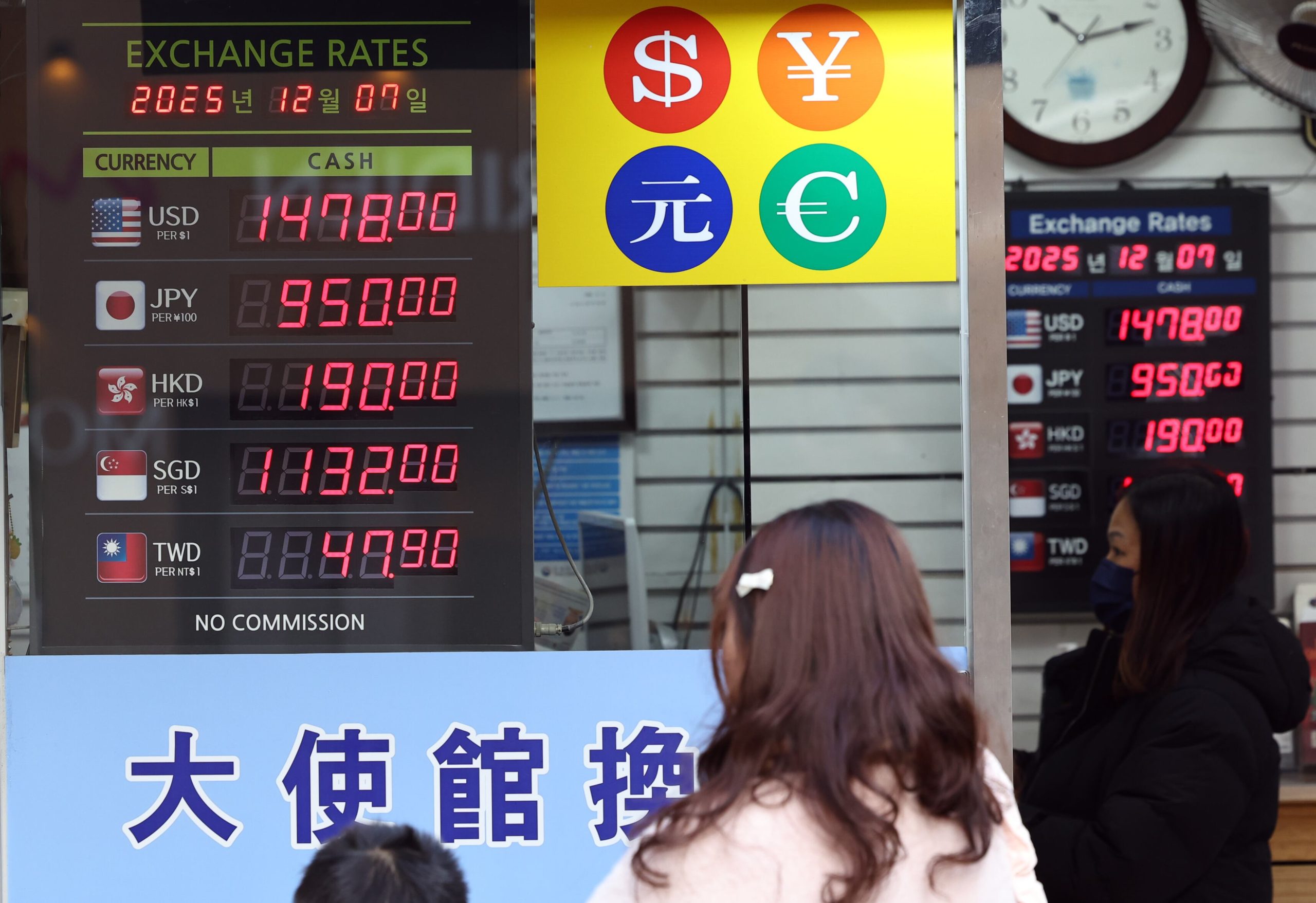
In response to ongoing exchange rate volatility, the government is establishing a dedicated task force (TF) to closely scrutinize the foreign exchange activities of export-oriented companies. The primary objective is to stabilize the supply and demand of foreign currency by monitoring corporations that retain US dollars earned from exports instead of converting them into the local Korean won.
The Ministry of Economy and Finance announced the formation of the TF, which will operate under the Foreign Exchange Fund Division of the International Finance Bureau. The ministry has also augmented personnel to effectively monitor the currency exchange practices of exporting firms. According to a ministry representative, the TF’s mandate is specifically focused on monitoring the currency exchange trends of export companies, rather than addressing broader high exchange rate concerns. Its attention will be directed towards issues directly related to the currency exchange behaviors of these firms.
Intensified Scrutiny of Dollar Holdings by Exporters
This initiative builds upon a previous announcement made on the 1st of the month, where the government outlined a comprehensive strategy to stabilize the foreign exchange market. A key component of this strategy involves regularly monitoring the currency exchange and overseas investment activities of export companies. The government also indicated that access to policy fund support would be contingent on these activities. The underlying principle is to incentivize companies to convert a larger portion of their dollar holdings into Korean won by offering preferential access to government subsidies and policy benefits.
The creation of this dedicated TF represents a concrete step in implementing these previously announced measures. While the government has periodically expressed its intention to monitor export companies in the past, this marks the first instance of establishing a dedicated organization specifically tasked with carrying out this initiative.
A common practice among export companies is to retain US dollars earned from overseas transactions, deferring their conversion into Korean won. This strategy is often employed in anticipation of favorable exchange rate movements. By holding onto dollars and converting them later at a higher exchange rate, companies can potentially realize exchange rate profits. However, the widespread adoption of this practice can reduce the supply of dollars in the foreign exchange market, consequently exerting upward pressure on exchange rates.
Monitoring Extended to National Pension Service and Securities Firms
The government’s broader stabilization strategy, announced on the 1st, also encompasses monitoring plans for the National Pension Service and securities firms.
A meeting was convened on the 30th of last month, bringing together representatives from the Ministry of Economy and Finance, the Ministry of Health and Welfare, the Ministry of Trade, Industry and Resources, the Financial Services Commission, the Bank of Korea, and the Financial Supervisory Service. The purpose of the meeting was to assess the structural conditions of the foreign exchange market and to expedite the implementation of policy measures aimed at stabilizing foreign exchange supply and demand.
As a result of these discussions, the Bank of Korea and the National Pension Service have initiated formal discussions regarding the extension of their existing $65 billion foreign exchange swap agreement, which is scheduled to expire at the end of the current year. These discussions also include exploring methods for converting the National Pension Service’s dollar holdings into Korean won in a manner that preserves profitability.
The Financial Supervisory Service has announced its intention to conduct a review by January of the following year to assess the adequacy of investor disclosures and protections related to overseas investments offered by securities firms and other financial institutions. Lee Chan-jin, Governor of the Financial Supervisory Service, stated that the review aims to determine whether financial companies are adequately disclosing the risks associated with overseas investments, particularly in situations where the primary motivation is to generate commission revenue. This is widely interpreted as a move to curb potentially excessive promotion of overseas stock investments.
Concerns Over the Sufficiency of Short-Term Measures
Since the sharp depreciation of the Korean won began in late September, the government has announced or implemented measures related to the foreign exchange market on seven separate occasions.
However, experts suggest that these short-term measures may be insufficient to fundamentally address the underlying causes of the rising exchange rate trend. Kim Jeong-sik, an emeritus professor at Yonsei University, argues that sustainable measures are needed to attract investment in the Korean won, such as strengthening industrial competitiveness and creating a more favorable business environment. Without these fundamental changes, it may prove difficult to reverse the upward trajectory of exchange rates.