
The specter of the Great East Japan Earthquake, a devastating event that claimed over 20,000 lives in Japan, has resurfaced following a recent seismic event. The Japan Meteorological Agency (JMA) issued an “aftershock alert” early on the 9th, specifically for the offshore regions of Hokkaido-Sanriku, Aomori, Iwate, and Miyagi Prefectures. This alert signals an elevated risk of a “megathrust earthquake” in the area that was tragically impacted by the March 11, 2011 earthquake, which generated tsunami waves reaching heights of 20 to 40 meters. A megathrust earthquake is defined as a powerful earthquake registering a magnitude of 8 or higher.
This heightened risk is attributed to a significant earthquake that struck on the evening of the 8th. Historically, the probability of a megathrust earthquake increases in the aftermath of a strong earthquake.
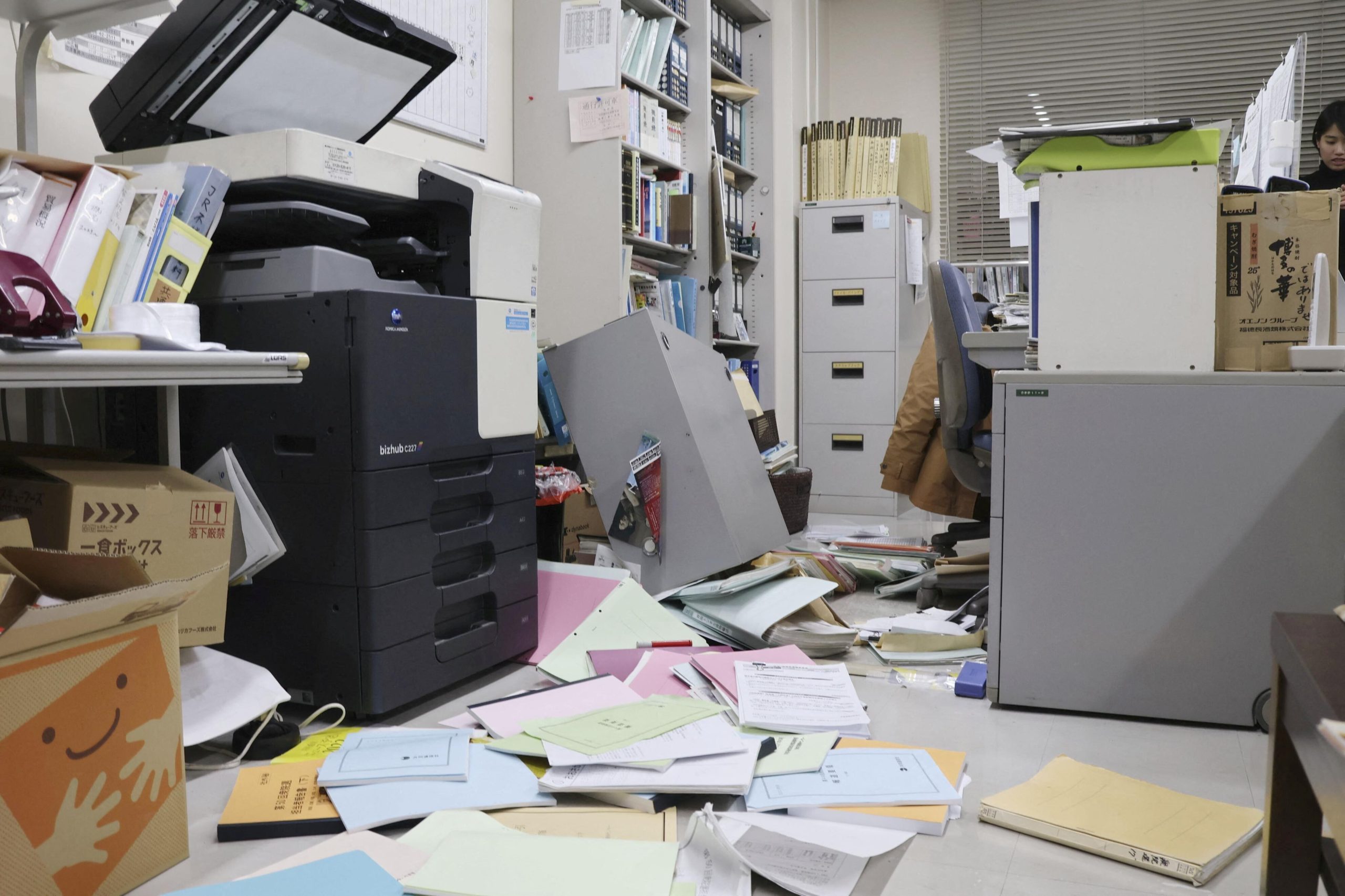
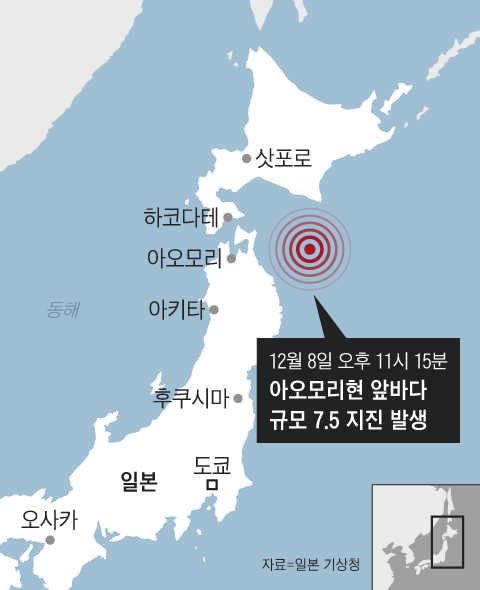
At 11:15 p.m. on the 8th, a magnitude 7.5 earthquake struck off the coast of Aomori Prefecture, located at the northeastern tip of Honshu Island. The earthquake’s epicenter was located at a depth of 54 kilometers. This magnitude is comparable to the magnitude 7.6 earthquake that struck the Noto Peninsula in Ishikawa Prefecture in January of the previous year. However, the seismic intensity, which directly correlates to the degree of damage, registered lower 6 in Hachinohe City, Aomori Prefecture, and upper 5 in the towns of Oirase and Hashikami. In Tokyo and other areas, the intensity was recorded as 3. The Noto earthquake, which resulted in hundreds of casualties, reached a maximum seismic intensity of 7.
The JMA’s seismic intensity scale is a measure of the ground shaking experienced during an earthquake, a relative concept distinct from “magnitude,” which quantifies the earthquake’s absolute energy. At intensity lower 6, standing becomes difficult, and most unsecured furniture collapses. At intensity upper 5, window glass and wall tiles may break. As of 3 a.m. on the 9th, reports indicated 13 injuries, including one serious, eight minor, and four with undetermined severity. Crucially, no operational issues were reported at nuclear power plants in the region, including the Tomari Nuclear Power Plant in Hokkaido, the Higashidori Nuclear Power Plant in Aomori Prefecture, and the Onagawa Nuclear Power Plant in Miyagi Prefecture.
The primary concern now revolves around the potential for a subsequent “megathrust earthquake” of magnitude 8 or higher. The JMA’s 2 a.m. announcement marked the first time the “Hokkaido-Sanriku offshore area aftershock alert information” had been issued since the megathrust earthquake alert system was introduced in December 2022. The JMA stated, “According to past global large-scale earthquake statistical data, the frequency of a magnitude 8 or higher earthquake occurring within a week after a magnitude 7.0 or higher earthquake is about once every 100 times, which is higher than usual.” This translates to a 1% probability of a magnitude 8 or higher earthquake occurring within the next week.
While a 1% chance may seem small, it is not negligible, particularly in the Sanriku region, which is historically prone to strong earthquakes. The typical probability of a strong earthquake occurring within a week in this area is considered to be less than 0.1%. This signifies that the current risk level is more than ten times higher than usual.
Notably, a magnitude 7.3 earthquake occurred off the coast of Hokkaido and Sanriku two days before the devastating magnitude 9.0 megathrust earthquake (the Great East Japan Earthquake) in 2011. An official from the JMA told NHK that in the “worst-case scenario” within the coming week, “we must assume an earthquake like the 3.11 disaster could occur.” They further emphasized that “At that time, high tsunami waves hit Chiba Prefecture, which is far from the epicenter, and in some places, the tsunami was unusually high. There is no guarantee that such an earthquake will not occur again, and preparation is necessary.”
In light of the increased risk, the Japanese Cabinet Office issued a statement urging citizens to “respond to disaster prevention with the mindset of protecting your own life.” However, they clarified that predicting earthquakes with specific dates remains impossible. The Cabinet Office also stressed the importance of verifying information from reliable sources to avoid unnecessary panic and cautioned against spreading misinformation.
Prime Minister Sanae Takaichi echoed these concerns, urging citizens to “pay attention to information from the Meteorological Agency and local governments” for the next week. She also emphasized the need to “reconfirm earthquake measures such as securing furniture, and be prepared to evacuate immediately if you feel shaking.”
Key recommendations for preparedness include:
- Securing furniture: This involves anchoring tall or heavy furniture to walls to prevent them from toppling over during an earthquake.
- Preparing an emergency kit: This kit should include essential supplies such as water, non-perishable food, a first-aid kit, a flashlight, a battery-powered radio, and any necessary medications.
- Identifying evacuation routes and shelters: Familiarize yourself with the designated evacuation routes in your area and the locations of nearby emergency shelters.
- Staying informed: Monitor official announcements and updates from the Japan Meteorological Agency and local government authorities.
- Practicing evacuation drills: Conduct regular drills with your family or household to ensure everyone knows what to do in the event of an earthquake.
- Knowing the Tsunami Hazard: If you are near the coast, be familiar with tsunami warning signs and evacuation routes.
The increased seismic activity serves as a stark reminder of Japan’s vulnerability to earthquakes and the critical importance of preparedness and vigilance.