
The Independent Corrupt Practices and Other Related Offences Commission (ICPC), in partnership with the Federal Ministry of Works, has initiated a nationwide special tracking exercise focused on verifying and auditing 760 federal road projects. The total value of these projects is estimated to exceed N36 trillion.
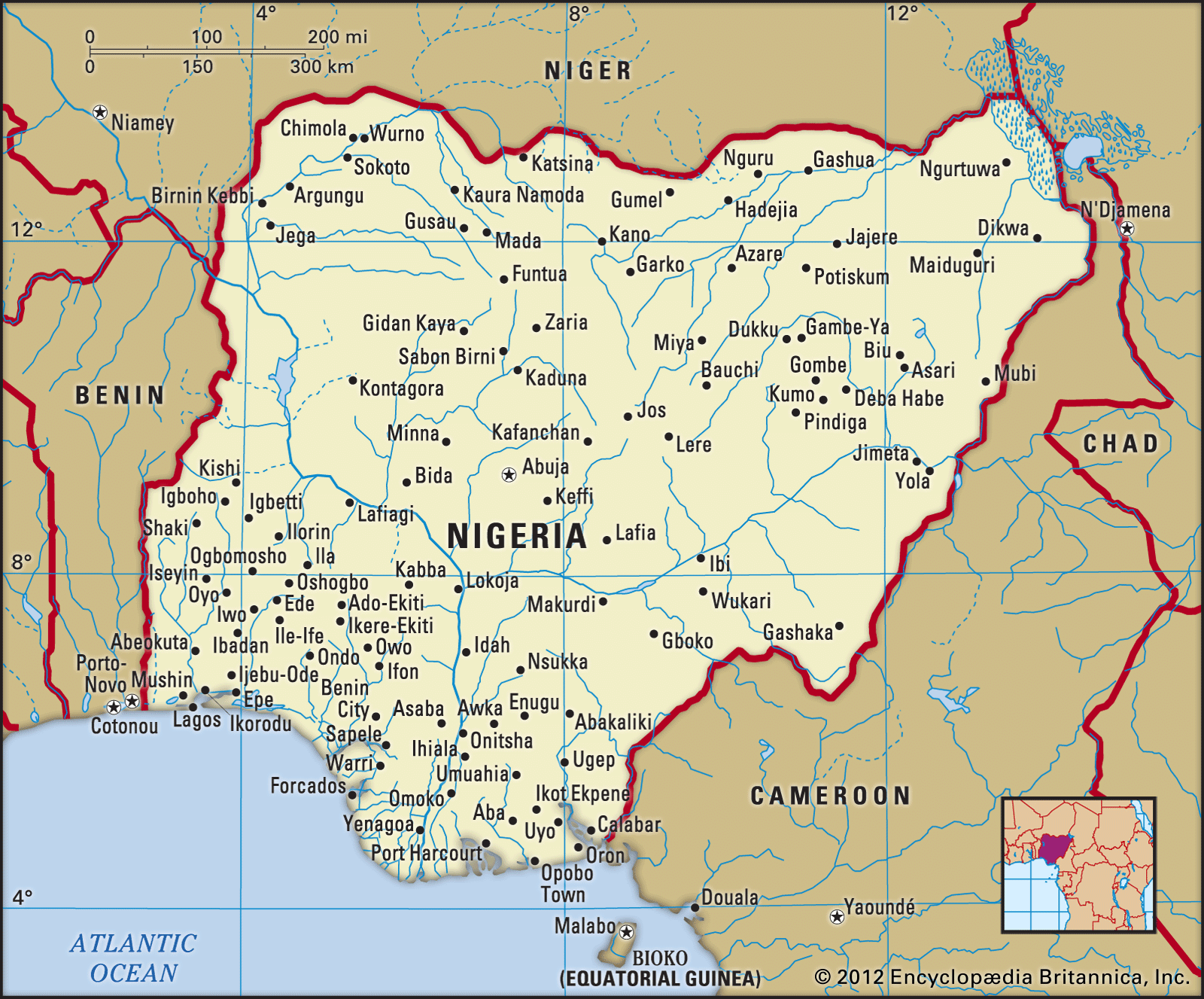
According to the ICPC, the collaborative effort involves deploying joint teams across all 36 states and the Federal Capital Territory (FCT). These teams are composed of ICPC investigators, engineers from the Ministry of Works, and independent professionals, including members of the Nigerian Institute of Quantity Surveyors. Their primary task is to conduct thorough physical site inspections and review project records.
The ICPC, through its spokesperson John Odey, stated that the exercise is designed to enhance fiscal governance, improve procurement processes, enforce accountability among contractors, and recover public funds in cases where projects are inflated or not executed according to contractual agreements.
Key Objectives of the Tracking Exercise
The initiative aims to achieve several critical national objectives:
Enhancing Fiscal Governance: This involves ensuring sustainable and cost-effective infrastructure development, as well as the optimal use of public funds. The tracking exercise seeks to identify and eliminate wasteful spending and ensure that resources are allocated efficiently.
Strengthening Procurement Integrity: The exercise aims to investigate and deter fraudulent practices in the awarding of government contracts. This includes scrutinizing the bidding process, evaluating the qualifications of contractors, and ensuring that contracts are awarded fairly and transparently.
Enforcing Contractor Accountability: The tracking exercise includes rigorous monitoring of project execution to ensure contractors adhere to contractual specifications and complete projects as agreed. This also addresses the issue of abandoned projects, compelling contractors to resume work and fulfill their obligations.
Securing Financial Recovery: The ultimate goal is to recover public funds from projects that are found to be grossly inflated or where contractors have demonstrably failed to perform. This involves identifying instances of overpayment, substandard work, or non-completion of projects, and taking appropriate action to recover the misappropriated funds.
Collaboration for Transparency
Odey emphasized that the collaboration with the Ministry of Works is a crucial aspect of the ICPC’s ongoing efforts to enhance transparency in public procurement and project execution. By working together, the two entities can leverage their respective expertise and resources to achieve a more comprehensive and effective oversight of federal road projects.
Proactive Approach to Safeguarding Infrastructure Investments
The ICPC views this exercise as a proactive and system-driven approach to safeguarding national infrastructure investments. By identifying and addressing potential issues early on, the commission aims to prevent corruption and ensure that public funds are used effectively to build and maintain high-quality infrastructure.
Previous Project Monitoring Interventions
The current tracking exercise is part of the ICPC’s broader strategy of project monitoring interventions. Over the past four years, the commission has conducted similar nationwide reviews of constituency and capital projects. These reviews have focused on reducing contract inflation, detecting abandoned or duplicated projects, and strengthening accountability in government spending.
The ICPC’s ongoing efforts to monitor and track government projects reflect its commitment to combating corruption and promoting good governance in Nigeria. By working in collaboration with other government agencies and independent professionals, the commission aims to ensure that public funds are used effectively and that infrastructure projects are completed to the highest standards.