
Landmark Ruling: North Korean Literature Import Case Reaches Appellate Court
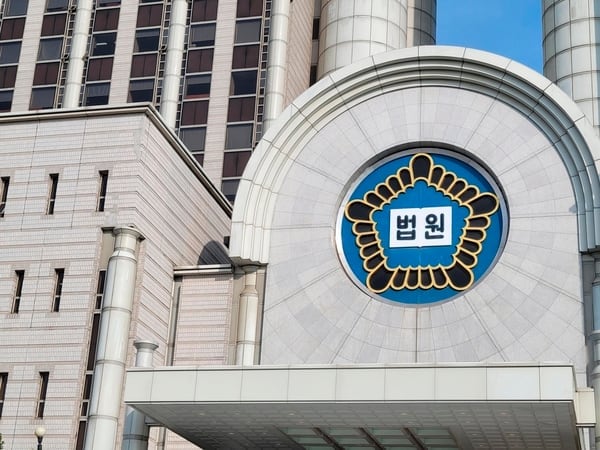
The Seoul Central District Court’s Criminal Appeals Division 8-3, under the stewardship of Presiding Judge Choi Jin-suk, has delivered a verdict in the case of Jeong Ik-hyeon, chairman of the South-North Korea Enterprises Federation Tongil Nongsa Cooperative (Tongil Nonghyup). Mr. Jeong has been fined 2 million Korean won for the alleged unauthorized importation and publication of North Korean novels. This appellate decision represents a reduction from the initial 3 million Korean won penalty handed down in the first trial.
The proceedings stemmed from accusations that Mr. Jeong had contravened the Inter-Korean Exchange and Cooperation Act. Specifically, he was charged with importing North Korean novels, or USB drives containing such works, on three separate occasions between 2018 and 2020. Crucially, these actions were allegedly undertaken without the requisite approval from the Minister of Unification. South Korean law mandates that any transactions involving goods exchanged between North and South Korea, including the specifics of the transaction and payment modalities, must receive explicit authorization from the Minister of Unification.
Evidence presented during the investigation indicated that Mr. Jeong had entered into an agreement with North Korea’s copyright office. This arrangement was facilitated by a Chinese intermediary, through whom 22 North Korean novels were reportedly brought into the country. Among the titles mentioned were the classic Korean medical text Dongui Bogam and The Three Ministers of Goguryeo. Further compounding the charges, in January 2020, Mr. Jeong allegedly organized a press conference and proceeded to sell Dongui Bogam at 25,000 Korean won per volume, all without obtaining prior approval from the Ministry of Unification.
During the legal proceedings, Mr. Jeong maintained his innocence, presenting a defense that challenged the classification of the imported materials. He argued that the books, acquired from a Chinese businessman, should be considered Chinese goods rather than North Korean products. Furthermore, he asserted that as the content did not undermine public decency nor violate the National Security Act, it should not be subject to import approval regulations.
However, the court in the initial trial rejected these arguments. The ruling stated that the defendant was aware of the necessity to obtain approval from the Minister of Unification. Despite this knowledge, he proceeded with the publication without authorization, reportedly deeming the procedural delays and associated conditions to be unfair. This rationale led to his conviction in the first instance.
The appellate court’s decision brought a partial reprieve. While Mr. Jeong was acquitted of one specific charge – that of receiving nine North Korean novels from the president of a brokerage company in Seoul’s Jongno District – he was still found liable for other violations, leading to the reduced fine. This nuanced outcome highlights the complexities involved in inter-Korean cultural exchanges and the stringent regulatory framework governing them. The case underscores the delicate balance South Korea attempts to maintain between fostering inter-Korean relations and upholding national security and legal protocols. The specifics of how goods are sourced, the intermediaries involved, and the ultimate intent behind their dissemination all appear to be critical factors in the judicial assessment of such cases.