

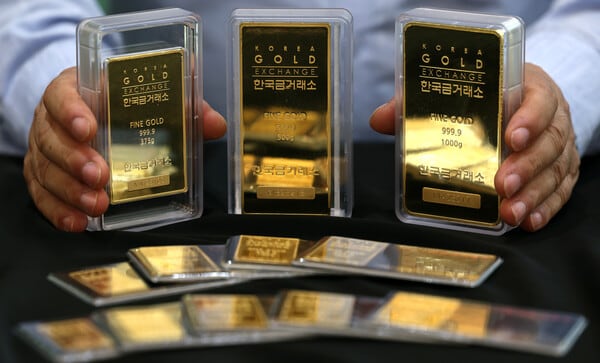
Global demand for gold experienced a significant surge between September and November, driving a corresponding increase in the purchase of gold bars domestically. This surge is largely attributed to the U.S. Federal Reserve’s anticipated interest rate cuts and the weakening dollar, exacerbated by ongoing trade tensions. In this climate of uncertainty, gold has solidified its position as a premier safe-haven asset, attracting investors seeking stability and security.
Unwavering Demand Despite Supply Constraints
Financial data released on the 9th reveals the robust demand for gold bars in South Korea. The nation’s four major banks—KB, Shinhan, Woori, and Hana—collectively sold 1,571.6 kilograms (1.6 tons) of gold bars during the September-November period. This figure represents an impressive 11.2% increase compared to the total sales of 1,412 kilograms (1.4 tons) recorded for the entire preceding year. Notably, the sales volume achieved in just three months surpassed the cumulative sales of the previous year. When considering the broader period from January to November, the four banks sold a staggering 3,660.8 kilograms (3.7 tons) of gold, marking a remarkable 159% increase compared to the previous year.
The institutions responsible for supplying gold bars to these banks include the Korea Minting, Security Printing & ID Card Operating Corporation (KOMSCO), the Korea Gold Exchange, and the Samsung Gold Exchange. Shinhan Bank, however, maintains its own independent supply channel. The initial catalyst for this surge in demand can be traced back to September, when the U.S. Federal Reserve implemented a 0.25 percentage point reduction in its benchmark interest rate—the first such move in nine months. This action triggered a global surge in gold demand, which was mirrored domestically by an explosion in gold bar purchases.
This unprecedented demand prompted KOMSCO to temporarily halt its supply of gold bars, starting in October. Furthermore, the Korea Gold Exchange implemented restrictions on sales, limiting transactions to 100-gram and 1-kilogram bars, effective from October 28. Despite these measures aimed at curbing demand, the sale of gold bars continued unabated, highlighting the metal’s enduring appeal.
The significant increase in demand is further underscored by the rise in revenue generated from gold bar sales. The four banks’ combined revenue from September to November reached 297.544 billion Korean won, reflecting an impressive 86.5% increase compared to the previous year’s total revenue of 159.515 billion won. According to a banking representative, gold bar sales have remained consistently strong throughout December, suggesting that the year-end figures are likely to reflect further growth.
Global Trends: China’s Gold Accumulation
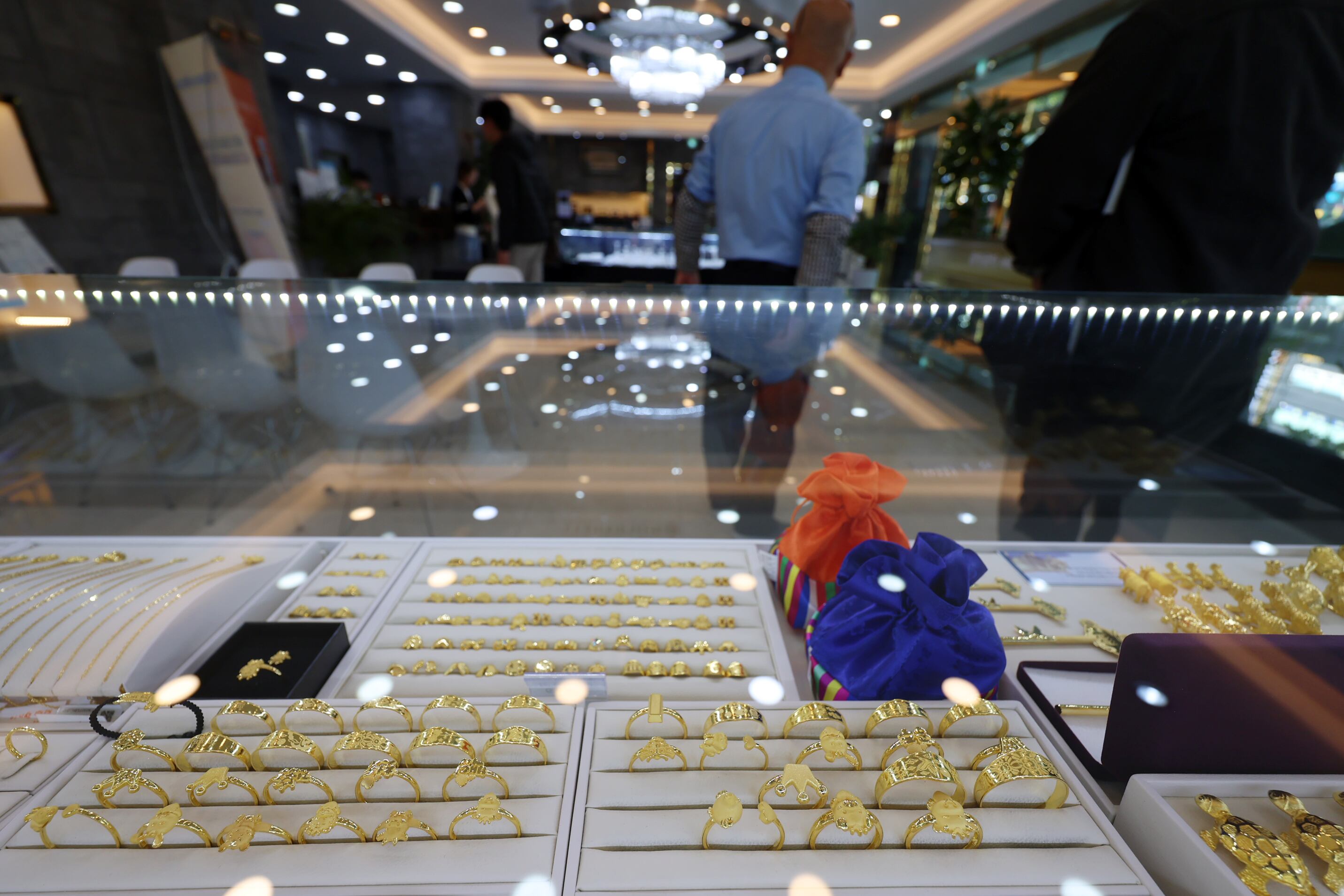
The appeal of gold extends beyond domestic markets. On the international stage, gold is increasingly being viewed as a safe-haven alternative to the U.S. dollar, which has experienced a period of weakness under the current U.S. administration. A notable example of this trend is the People’s Bank of China, which announced on November 30 that its gold reserves had reached 74.12 million ounces (2,101 tons). This represents an increase of approximately 23 tons since the end of the previous year. Furthermore, the proportion of gold within China’s total foreign reserves has risen from 5.97% at the end of the previous year to 9.28% in November, indicating a strategic shift towards gold as a reserve asset.
International gold prices have remained elevated since reaching a record high in October. On the New York Mercantile Exchange, December gold futures traded at $4,221.5 per ounce, marking a substantial 58.4% increase compared to the previous year. Domestic gold prices in South Korea, which often include a “Kimchi premium,” have also experienced a corresponding rise. As of the 8th, the Korea Gold Exchange’s buying price for one “don” (3.75 grams) was 871,000 Korean won, maintaining a level of approximately 870,000 won since the beginning of the month.
Future Projections: Safe Haven or Speculative Asset?
Looking ahead, expectations of further interest rate cuts at the U.S. Federal Open Market Committee (FOMC) meeting are fueling projections of continued increases in gold prices in the coming year. The prevailing low-interest-rate environment and persistent global uncertainties are expected to further bolster gold’s appeal as a safe-haven asset. A Goldman Sachs survey of institutional investors revealed that 36% anticipate gold prices to exceed $5,000 per ounce by the end of next year, while 33% predict a range of $4,500–$5,000.
However, amidst the optimism, concerns are emerging about the potential for gold to transition into a speculative asset. The Bank for International Settlements (BIS), in its quarterly report, cautioned that gold prices are increasingly moving in tandem with riskier assets, deviating from historical patterns. The BIS suggests that gold has become significantly more speculative and highlights the potential for individual investors to overheat the market, leading to explosive rises followed by sharp and rapid corrections.
In summary, the recent surge in gold demand reflects a confluence of factors, including economic uncertainty, low interest rates, and the weakening dollar. While gold is currently perceived as a safe-haven asset, the potential for speculative activity warrants careful monitoring as the market evolves.