

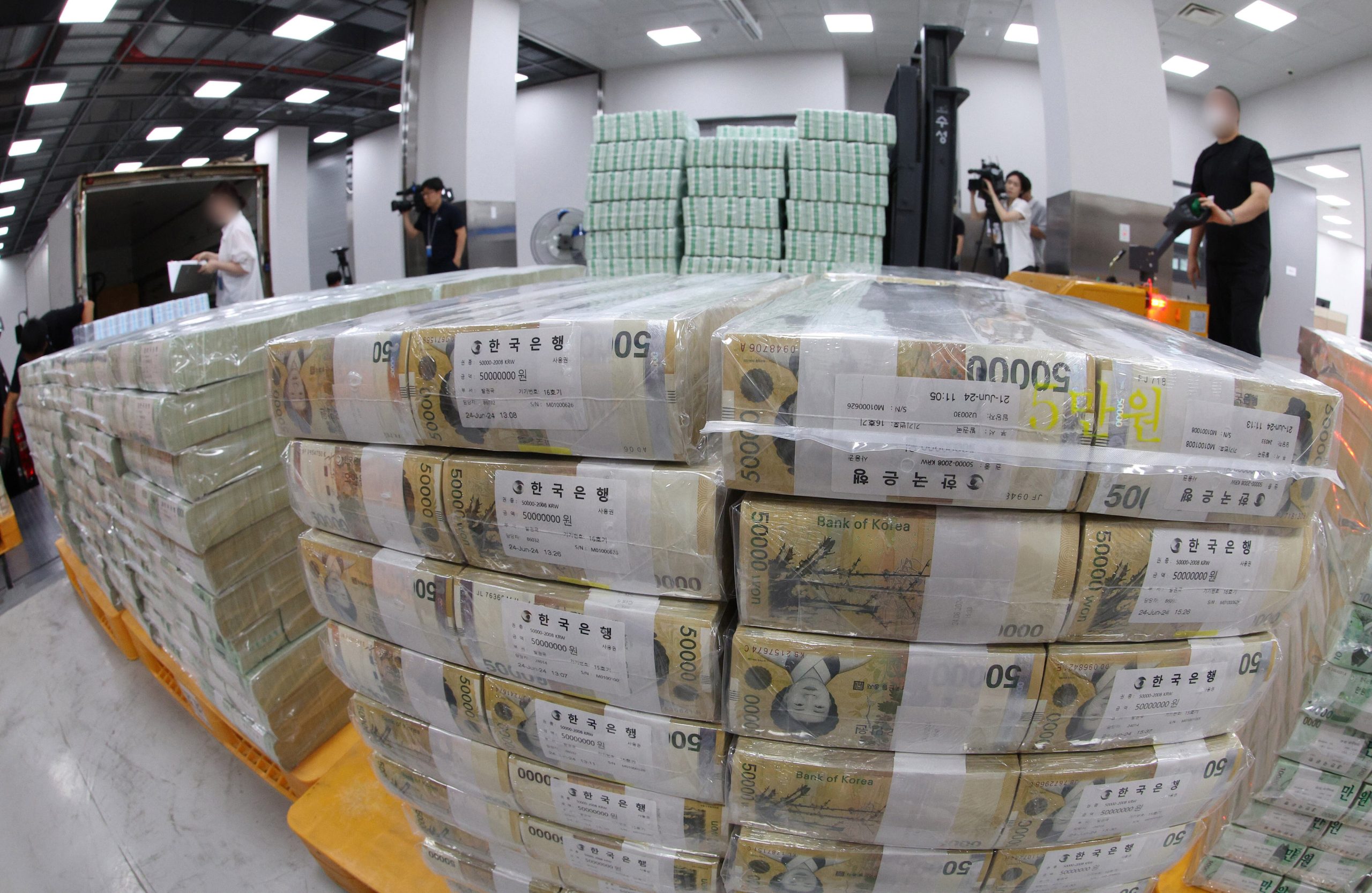
Rising Demand for 50,000 Won Bills Ahead of Lunar New Year
As the holiday season approaches, a notable trend has emerged in the way people are withdrawing cash from banks. More individuals are opting for 50,000 won bills rather than 10,000 won bills, marking a significant shift in currency preferences. This pattern has been consistent over the years, with the demand for 50,000 won notes reaching an all-time high this year.
According to data obtained by Rebuilding Korea Party lawmaker Cha Gyu-geun, the Bank of Korea exchanged a total of 34.34 billion Korean won in currency between January 13 and 14 of this year, ahead of the Lunar New Year celebrations. Among these, 50,000 won bills accounted for the largest portion, totaling 15.86 billion won. This represents an increase of approximately 1 billion won compared to the same period last year, setting a new record.
In contrast, the exchange amount for 10,000 won bills saw a decline. The figure dropped from 14.93 billion won during last year’s Lunar New Year to 14.01 billion won this year. Meanwhile, 5,000 won bills remained relatively stable, with a slight decrease from 2.8 billion to 2.78 billion won. The 1,000 won bills, on the other hand, experienced a minor increase, rising from 1.69 billion to 1.7 billion won.
Shift in Coin Exchange Trends
One of the most striking observations this year is the absence of any coin exchanges. For the first time, there were no instances of old coins being exchanged for new ones during the Lunar New Year period. The exchange amount for all types of coins—including 10, 50, 100, and 500 won coins—was recorded as zero.
Last year, however, the exchange amounts for these coins were significantly higher. Specifically, 10 won coins saw an exchange of 100,000 won, 50 won coins amounted to 500,000 won, 100 won coins reached 2 million won, and 500 won coins totaled 9 million won. This year, the lack of demand can be attributed to two main factors: a decline in cash usage and rising prices, which have reduced the need for smaller denominations.
Role of the Bank of Korea in Currency Exchange
The Bank of Korea typically conducts currency exchanges every year before major holidays, ensuring that the public has access to clean and updated banknotes. This process involves replacing old or damaged bills with new ones, maintaining the integrity of the currency in circulation.
Lawmaker Cha Gyu-geun emphasized the importance of this service, suggesting that if individuals face long waiting times at commercial banks, they may consider using the central bank for exchanging old bills. This recommendation highlights the role of the Bank of Korea as a reliable alternative for those seeking to obtain fresh currency ahead of the festive season.
Conclusion
The increasing preference for 50,000 won bills and the declining use of coins reflect broader changes in consumer behavior and economic conditions. As more people rely on digital transactions and larger denominations become more practical, the traditional patterns of currency exchange are evolving. The Bank of Korea’s efforts to ensure a steady supply of new bills underscore its commitment to supporting the financial needs of the public during key periods of the year.