

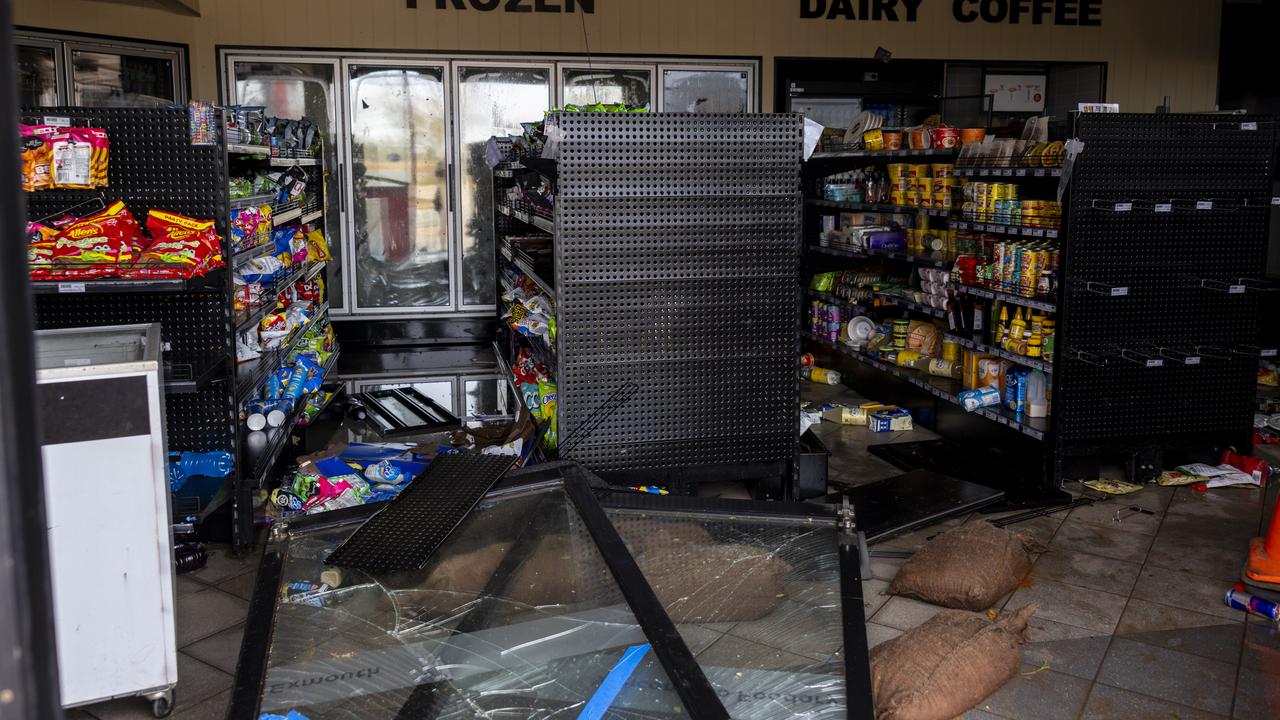
Cyclone Narelle Leaves Agricultural Heartlands Devastated and Communities Facing Lingering Flood Threats
A vital agricultural region in Western Australia is grappling with the widespread destruction wrought by Cyclone Narelle, while low-lying communities remain on high alert for persistent flooding risks. The cyclone, which made landfall on Friday night, has inflicted significant damage on the food-bowl area near Carnarvon, situated approximately 900 kilometres north of Perth.
Local enterprise Bumbak’s, a farm and produce store, was among the properties bearing the brunt of the storm’s ferocity as it carved a path along the Western Australian coast. Jo Bumbak, the owner, described the scene on Sunday, reporting that “the corn has been absolutely flattened, the tomato seedlings have been wind blasted, they won’t be able to produce anything.”

Adding to the grim assessment, Ms. Bumbak highlighted the plight of a nearby avocado farmer who had been “entirely wiped out,” with fruit scattered across the devastated landscape. The Carnarvon region plays a crucial role in Western Australia’s food security, supplying an estimated 60 per cent of the state’s fresh produce during the winter months, and a staggering 80 per cent of its bananas. Mature trees on banana plantations suffered severe damage, though Ms. Bumbak noted with some relief that younger plants exhibited remarkable resilience.
Gascoyne River Threatens Isolation as Floodwaters Rise
The impact of Cyclone Narelle extends beyond agricultural losses, with emergency services issuing stark warnings to residents in the affected area. The Gascoyne River, a waterway that traverses the state’s inland before reaching Carnarvon, was predicted to flood on Sunday afternoon, potentially cutting off communities.
Emergency Services Commissioner Darren Klemm briefed reporters, indicating that the recovery and clean-up operations following the cyclone were anticipated to extend over several weeks.
Exmouth Bears the Brunt: Infrastructure Crippled and Homes Damaged
After unleashing its fury on coastal communities with winds gusting up to 250 km/h and delivering a year’s worth of rainfall in a single day, the cyclone, which had initially crossed the Queensland coast more than a week prior, began to weaken as it tracked inland to the east of Perth. Exmouth, strategically located on the North West Cape, bore the most severe impact of the category-four cyclone.
Authorities have confirmed the destruction of four structures, with an additional 27 properties sustaining damage. However, these figures are expected to rise as assessments continue, with over 2,000 homes in the region still to be evaluated.
Power restoration efforts were underway, with electricity returned to 250 homes by Sunday morning. Emergency crews have been dispatched to aid in restoring services to the remaining affected properties. Nevertheless, Horizon Power, the electricity provider, cautioned that some areas might experience prolonged power outages due to challenges with access and safety concerns.
Simultaneously, significant work is being undertaken to repair damaged water infrastructure. Roadways are being systematically cleared to facilitate the movement of emergency services and essential supplies. However, several roads remain inundated and are deemed too hazardous for passage. The town’s airport has also sustained extensive damage, leading to the grounding of all commercial flights.
Government Support and Economic Impact
In anticipation of the approaching Easter break, Premier Roger Cook has appealed to tourists to confirm their travel plans with operators before making any changes. “We don’t want them to not go and spend their dollars in those regional towns,” he stated, underscoring the importance of supporting local economies.
State relief payments of up to $4,000 have been made available to address the immediate needs of residents, encompassing costs such as temporary accommodation and emergency transportation.

Personal Accounts of Devastation and Resilience
Local resident Craig Kitson of Exmouth painted a stark picture of the devastation within the town. “The town has fundamentally changed,” he remarked. Despite experiencing personal losses, including a damaged fence and a night spent under a leaking roof, Mr. Kitson considered himself fortunate. “Some people’s lives have been drastically changed,” he added, emphasizing that some homes were completely obliterated.

Cyclone Narelle’s destructive path continued southward, impacting Coral Bay before making its second landfall on Friday evening just south of the small town, where it was downgraded to a category-three system. Further weakening occurred northeast of Kalbarri and Geraldton before it dissolved into a tropical low on Saturday morning.

Beyond the immediate devastation in Western Australia, Cyclone Narelle has also had a ripple effect on the global energy market, disrupting production at two of Australia’s major liquefied natural gas facilities operated by Chevron and Woodside. This disruption has exacerbated the existing global energy supply crunch.