
Reassessing the BEA Scholarship Scheme: A Policy Evolution Amidst Economic Realities
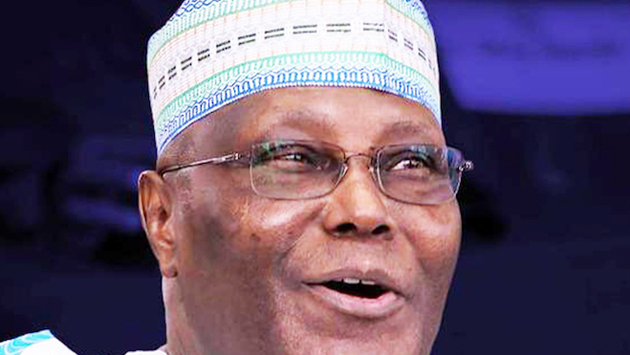
A recent exchange between former Vice President Atiku Abubakar and Denge Josef Onoh, a former southeast spokesman for President Bola Ahmed Tinubu, has brought the Benchmarking Excellence Abroad (BEA) scholarship scheme into sharp focus. While Abubakar has voiced concerns alleging neglect and abandonment of students, Onoh has presented a counter-narrative, framing the changes as a responsible policy shift driven by economic imperatives and a strategic move towards strengthening Nigeria’s domestic educational capacity.
Onoh contends that the narrative of “callous abandonment” spun by Abubakar does not align with the factual circumstances. Instead, he argues that the Federal Ministry of Education has undertaken a pragmatic reform process, necessitated by inherited fiscal constraints and a broader vision for Nigeria’s educational self-sufficiency. This reform, he asserts, prioritizes local institutions and is a deliberate departure from past approaches, including those during Abubakar’s tenure.
Dismantling the Allegations: A Point-by-Point Refutation
Onoh has systematically addressed Abubakar’s claims, providing what he describes as verifiable facts to counter the allegations:
- Allegation of “Quiet Obliteration”: Abubakar claimed the BEA scheme was “quietly obliterated” without prior notice. Onoh refutes this, stating that the Federal Ministry of Education officially announced the discontinuation of government-funded foreign scholarships in May 2025, following an extensive policy review. This decision was publicly communicated, with emphasis placed on the enhanced capacity of Nigerian universities, polytechnics, and colleges to offer equivalent, and often superior, programs domestically. This shift, Onoh explained, is part of wider economic reforms initiated by President Tinubu’s administration in May 2023 to address the nation’s strained public finances. The initial temporary suspension, referenced by Abubakar, was indeed a precursor to a comprehensive review that concluded full discontinuation was necessary, with only fully foreign-funded scholarships continuing. Furthermore, Onoh insists that parents and students were informed, citing a July 2024 update on stipend adjustments due to exchange rate pressures as evidence of ongoing communication.
The “Stranded Students” Claim: In response to the assertion that 1,600 students were left “stranded without support,” Onoh described this as a gross exaggeration. He stated that the Ministry of Education has categorically confirmed that no valid BEA scholar has been abandoned. All students enrolled prior to 2024 have reportedly received payments up to the 2024 budget year, fulfilling government obligations. Any delays in 2025 payments, he acknowledged, are attributed to temporary fiscal challenges that are being actively addressed in coordination with the Ministry of Finance. Onoh also asserted that no new scholarships were awarded after October 2025, and any documentation suggesting otherwise is considered inauthentic. For existing scholars, he maintained, the government remains committed to their support until graduation, including covering return travel costs for those opting to transfer to Nigerian institutions. This, Onoh argued, is not abandonment but “responsible stewardship of scarce resources, redirecting funds to bolster local education infrastructure that benefits far more Nigerians.”
Unpaid Stipends and Arrears: Abubakar’s portrayal of “thousands of dollars” in unpaid stipends, citing over $6,000 per student, is also challenged. Onoh clarified that stipends were paid partially in 2023 and 2024. In 2024, monthly stipends were reduced from $500 to $220, a practical adjustment he attributes to naira devaluation and budgetary constraints, rather than “cruelty.” Arrears from 2023, including exchange-rate differentials, and those from 2024, were acknowledged, with partial payments made in September 2024. No payments were made in 2025 due to ongoing fiscal reviews, but the ministry has assured that outstanding balances will be cleared as funds become available. Onoh characterized these issues as a reflection of Nigeria’s economic challenges, compounded by global inflation and currency fluctuations. He pointed to the House of Representatives’ investigation into stipend delays in November 2025 as evidence of the administration’s commitment to transparency, where parents’ concerns were reportedly heard and commitments reiterated.
Economic Context and Student Welfare: Onoh argued that Abubakar’s reference to worsening hardship between September and December 2023, and the stipend reductions, ignores the broader economic context. He linked these challenges to inherited economic woes, including the removal of fuel subsidies and forex reforms, which he stated were necessary for economic stabilization, despite criticisms. He asserted that students’ concerns have not been met with indifference, citing government engagement through forums, Zoom calls with the Federal Scholarship Board, and public assurances. Protests in Abuja were acknowledged, and the minister reportedly suggested reintegration options for affected students.
The Tragic Incident in Morocco: Regarding the death of a student in Morocco in November 2025 (erroneously stated as 2023 by Abubakar), Onoh expressed deep sadness. However, he cautioned against attributing the death solely to stipend delays without concrete evidence. While acknowledging that parents and students have linked the incident to financial hardship, the government has refuted claims of abandonment in Morocco, noting that all valid scholars there were paid up to 2024 and that delays are being addressed. Onoh views this incident as underscoring the need for reform but not as negating the administration’s efforts to support student welfare, including health insurance provisions within scholarship terms.
A Strategic Shift Towards Local Capacity Building
Onoh concluded by framing Abubakar’s narrative as a “desperate attempt to score political points.” He highlighted that the BEA program, initiated in 1993 and revitalized in 1999 under PDP governments, had faced similar funding issues in the past. President Tinubu’s administration, he argued, is focused on local capacity building, a strategy that promises to create sustainable opportunities for a significantly larger number of Nigerians, rather than subsidizing a select few abroad amidst economic strain. Onoh urged Abubakar to engage in constructive dialogue and refrain from spreading misinformation, emphasizing the administration’s commitment to education as a cornerstone of the “Renewed Hope Agenda,” with reforms expected to yield long-term dividends.