

UK Economy Faces Challenges as Inflation and Unemployment Rise
The UK economy is currently facing significant challenges, with inflation reaching its highest level in the G7 and unemployment hitting a four-year high. These developments have raised concerns about the effectiveness of the Labour government’s economic policies, particularly under Chancellor Rachel Reeves.
Rising Inflation and Economic Outlook
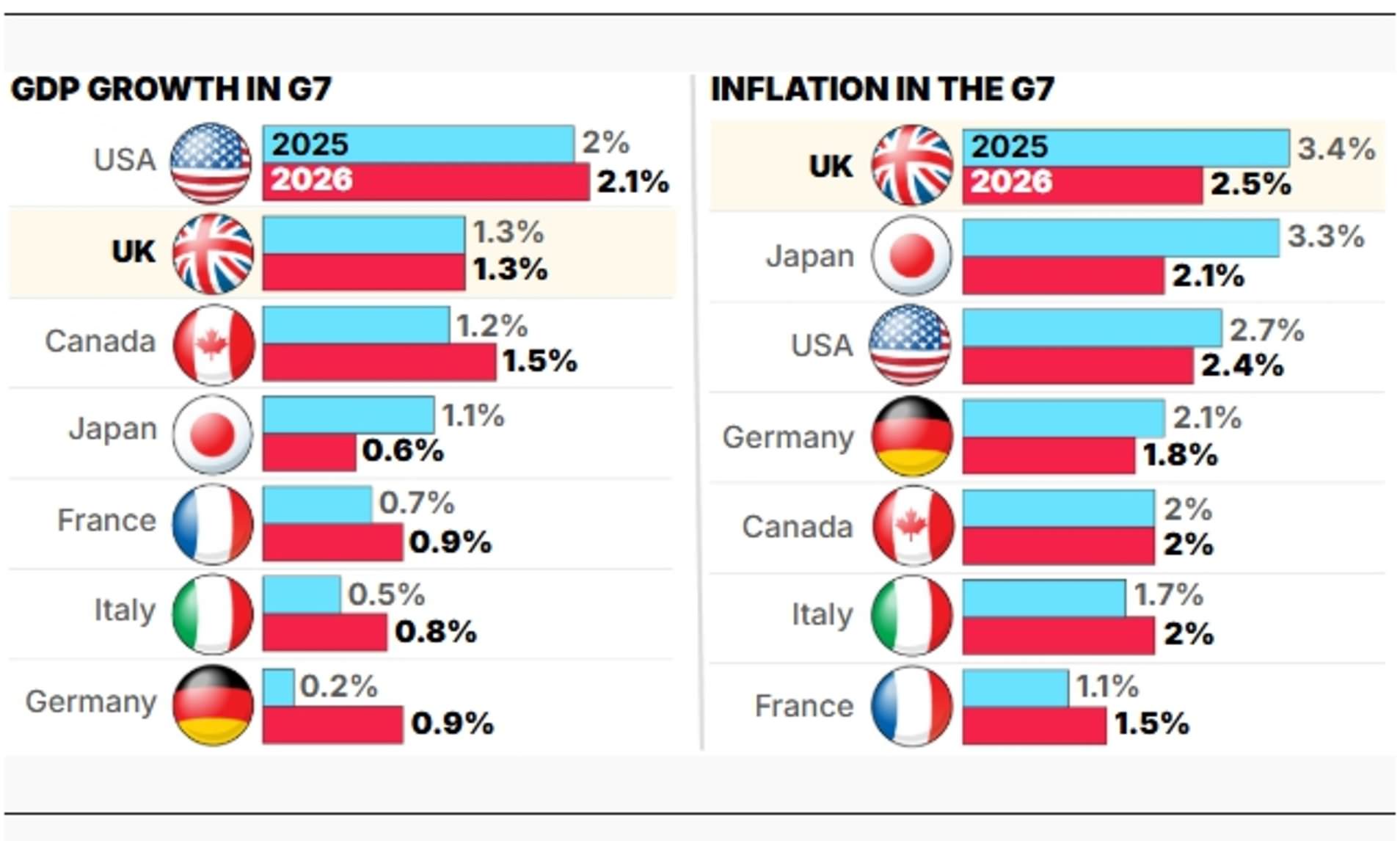
According to the International Monetary Fund (IMF), the UK is expected to experience higher inflation compared to other G7 nations this year and in 2026. The forecast for 2024 stands at 3.4 per cent, while 2026 is projected to see an inflation rate of 2.5 per cent. This places the UK ahead of countries like the United States, Germany, France, Italy, Canada, and Japan.
Analysts suggest that stubbornly high inflation, partly driven by tax hikes and increased costs imposed on businesses, is making it difficult for the Bank of England to reduce interest rates. This situation is further complicating the economic landscape for consumers and businesses alike.
Unemployment and Demographic Trends
Official statistics reveal that unemployment has surged to a four-year high of 4.8 per cent. The rise is primarily attributed to younger individuals, with joblessness among those aged 25-34 reaching its highest level since 2020. Meanwhile, a record number of over-65s are now employed, with more than 1.7 million people in this age group working.
Shadow Chancellor Sir Mel Stride criticized the current economic situation, stating that the IMF assessment highlights the challenges faced by the UK. He pointed out that inflation is rising faster than anticipated due to the decisions made by the Labour government. Since taking office, the party has allowed the cost of living to increase, debt to grow, and business confidence to decline to record lows.
Impact on Consumers and Businesses
The impact of these economic conditions is felt by working people across the country. Higher taxes, increased costs, and limited consumer spending are squeezing families from all sides. The situation is exacerbated by the need for further tax increases to fund the government’s spending plans and expansion of the state.
Alex Hall-Chen, principal policy advisor for employment at the Institute of Directors, emphasized the need for a change in policy direction to stimulate growth and support businesses in creating jobs. However, the prospect of additional tax measures, potentially amounting to £30 billion, looms large as the Budget approaches.
Interest Rates and Economic Growth
The UK’s poor inflation performance is also limiting the Bank of England’s ability to cut interest rates from the current level of 4 per cent. This could have a negative impact on millions of families hoping for cheaper mortgages and lower borrowing costs.
Russ Mould, investment director at AJ Bell, noted that the UK’s inflation problem could constrain the Bank of England’s capacity to steadily cut interest rates. This could lead to more sluggish economic growth, affecting both consumers and businesses.
Global Economic Projections
The IMF expects the UK economy to grow by 1.3 per cent this year and next, leaving it behind Donald Trump’s America in 2025 and both the US and Canada in 2026. While the UK’s service-dominated economy is performing better than Germany, which is in recession territory, and France, which is barely growing, the overall outlook remains challenging.
Government Response and Future Challenges
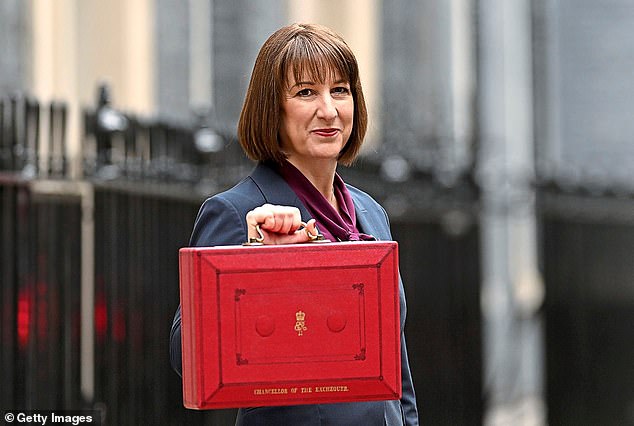
Chancellor Rachel Reeves highlighted a small increase in the UK’s growth forecast for this year, but she overlooked the downgrade for 2026. She pointed to the rise in average disposable income since the election, although this increase is being offset by surging food and energy costs.
The IMF noted that inflation forecasts have been revised upward in several economies, with the UK and the US being the most notable cases. The Fund also mentioned that headline and core inflation in Britain have surprised on the upside, exceeding previous expectations.
On a more positive note, the IMF argues that the projected inflationary bump should be temporary, with a loosening labour market and moderating wage growth eventually helping inflation return to the 2 per cent target set by the Treasury by the end of 2026.
Conclusion
As the UK prepares for the upcoming Budget, the economic challenges remain significant. The government faces pressure to address inflation, unemployment, and the impact of tax increases on consumers and businesses. With global trade policy uncertainty and potential protectionist measures looming, the path forward for the UK economy appears fraught with difficulties.