
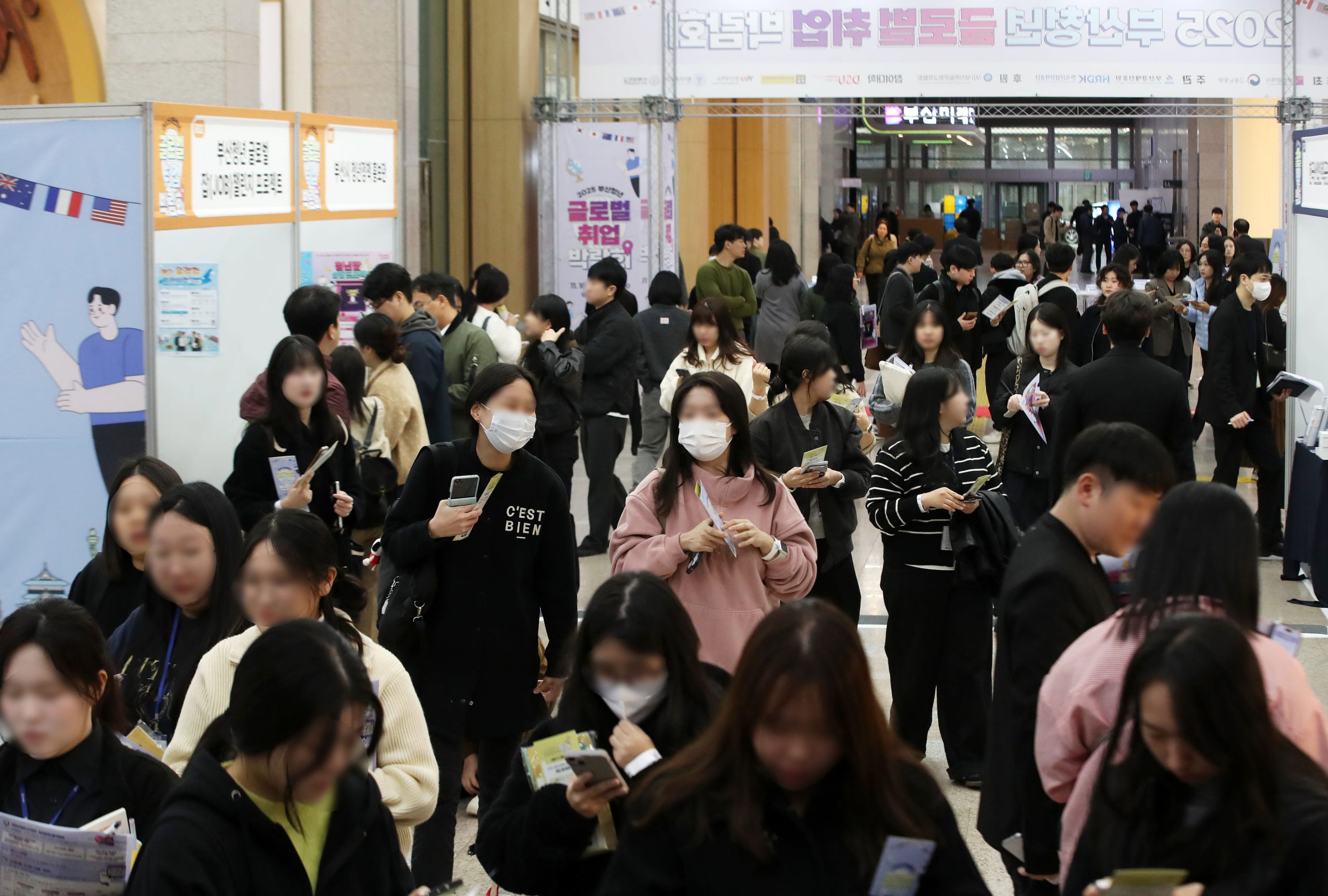
A recent survey has highlighted a concerning trend among college seniors and graduates: a significant proportion are exhibiting “passive job-seeking” behaviors, characterized by low expectations and minimal engagement in the job search process. This phenomenon is largely attributed to a prevailing negative sentiment regarding the current state of the job market.
The survey, conducted by the Federation of Korean Industries, polled 2,492 senior students and graduates across the nation, including those on leave or awaiting graduation. The findings revealed that a substantial 60.5% fell into the category of passive job seekers, engaging in what was described as “ritualistic job-seeking” (32.2%), “almost none” (21.5%), or “taking a break” (6.8%). In stark contrast, only 28.4% of respondents indicated that they were actively pursuing employment opportunities.
Several factors were cited as contributing to this lack of active engagement. These include:
Lack of Competencies: A significant 37.5% of respondents felt they lacked the necessary competencies, skills, or knowledge to secure employment.
Belief in Ineffectiveness: A considerable 22.0% expressed the belief that their efforts would be futile, assuming they would not be able to find a job even if they tried.
Limited Opportunities: Another 16.2% pointed to a shortage of available positions in their specific major or field of interest.
Unsuitable Conditions: Finally, 13.6% cited the absence of positions offering suitable wages or working conditions as a deterrent.
Furthermore, the survey indicated a growing pessimism regarding the new graduate hiring market. Approximately 37.1% of college students perceived this year’s market as “more difficult than last year,” marking a 0.6 percentage point increase from the previous year’s survey. This suggests a persistent and potentially worsening negative outlook among young job seekers.
For those actively engaged in the job search, the data revealed a challenging landscape.
Active job seekers reported applying for an average of 13.4 positions.
They experienced an average of 2.6 successful advancements past the initial document screening stage.
The average document screening pass rate stood at 19.4%, reflecting a notable 2.8 percentage point decline from the previous year’s rate of 22.2%.
The distribution of applications submitted by active job seekers was as follows:
1-5 applications: 40.7%
6-10 applications: 15.8%
21-25 applications: 12.0%
The outcomes of the document screening process were distributed as follows:
One successful pass: 25.4%
Complete rejection: 19.1%
Two successful passes: 16.3%
The survey also shed light on the anticipated duration of the job preparation period:
A substantial 62.6% of college students anticipated needing “six months or more” to prepare for the job market.
Within this group, 32.5% expected their preparation period to extend to “one year or more.”
These figures underscore the perceived difficulty and time investment associated with securing employment in the current environment.
Adding to these concerns, data from a recent Ministry of Data and Statistics survey revealed a concerning trend in youth unemployment. As of May this year, 55.2% of unemployed youth (aged 20–34) had been jobless for over a year. This represents a 2 percentage point increase compared to the figure from three years prior (53.2% in 2022). This prolonged period of unemployment can have significant long-term consequences for individuals and the economy as a whole.
Lee Sang-ho, Head of the Economic and Industrial Division at the Federation of Korean Industries, commented on the findings, highlighting the role of external economic factors and domestic labor market regulations. He stated that “Amid persistent external uncertainties such as high exchange rates, inflation, and shifts in trade order, domestic labor market regulations have tightened, reducing companies’ capacity for new hiring.”
He further emphasized the need for policy interventions to address these challenges. “The government and National Assembly should stimulate corporate vitality through deregulation, tax incentives, and investment support, while approaching policies that could shrink youth employment, such as extending the retirement age, with greater caution.” His statement underscores the urgency of creating a more supportive environment for job creation and ensuring that policies do not inadvertently disadvantage young job seekers.