
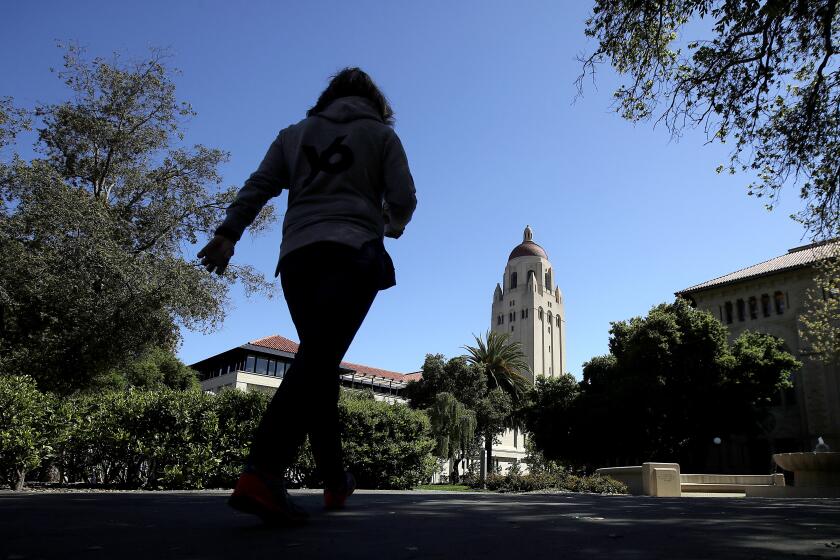
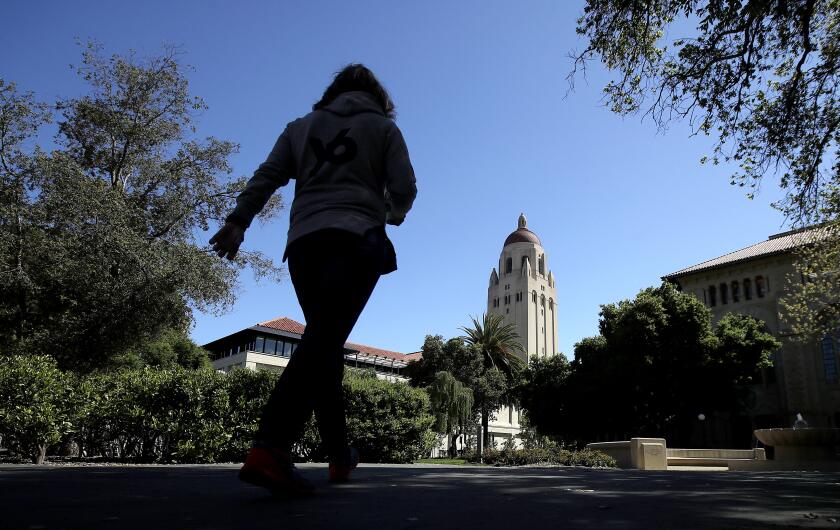
The landscape of tech employment is undergoing a seismic shift, with recent graduates from elite institutions like Stanford University reporting a stark decline in job prospects, a phenomenon they attribute directly to the rapid advancements in artificial intelligence. What was once considered a guaranteed path to a lucrative career – a software engineering degree from a top-tier university – is now described by some as having been devalued from a “golden ticket” to mere “bronze.”
This sentiment is particularly prevalent among students finishing their studies at highly ranked universities. The shock stems from a significant lack of job offers, a reality starkly different from the expectations they held as freshmen, before the widespread release of tools like ChatGPT. Today, AI systems possess coding capabilities that surpass those of many human programmers, fundamentally altering the demand for entry-level talent in the tech industry.
The AI Impact on Entry-Level Hiring
The burgeoning capabilities of generative AI have undoubtedly boosted the productivity of experienced engineers. However, this same advancement is simultaneously hindering the career aspirations of those early in their professional journeys. Stanford computer science graduates, in particular, are finding it challenging to secure positions at prominent tech companies.
“Stanford computer science graduates are struggling to find entry-level jobs” with the most sought-after tech brands, noted Jan Liphardt, an associate professor of bioengineering at Stanford University. He expressed surprise at this development, calling the situation “crazy.”
The job market, as perceived by Stanford students, has become dramatically skewed. Only a select group of graduates, often referred to as “cracked engineers”—those who already boast extensive resumes filled with product development and research experience—are landing the limited available positions. The rest are left to compete for significantly fewer opportunities.
A recent computer science graduate, who preferred to remain anonymous to speak candidly, described the prevailing atmosphere on campus as “dreary.” They elaborated, “People [who are] job hunting are very stressed out, and it’s very hard for them to actually secure jobs.”
A Widespread Trend Across California
This disruption isn’t confined to Stanford alone. Similar challenges are being observed at other California universities, including UC Berkeley and the University of Southern California. For graduates from less prestigious institutions, the job search has proven even more arduous.
Eylul Akgul, who graduated last year with a computer science degree from Loyola Marymount University, faced a similar predicament. Unable to secure job offers in the U.S., she returned to her home country, Turkey, to gain experience at a startup. Upon her return to the U.S. in May, she reported being “ghosted” by hundreds of potential employers. “The industry for programmers is getting very oversaturated,” Akgul commented.
The Evolving Threat of AI in Coding
The primary competitor for human programmers is continuously improving. When ChatGPT first emerged in 2022, its coding capabilities were limited to short bursts. Today’s AI agents can generate code for extended periods and execute basic programming tasks with greater speed and fewer errors than ever before.
While AI companies like OpenAI and Anthropic are actively hiring, this growth is not compensating for the overall decline in recruitment across the broader tech sector. A Stanford study indicated that employment for early-career software developers, specifically those aged 22 to 25, has seen a nearly 20% decrease from its peak in late 2022.
The impact of AI extends beyond software engineering, affecting roles in customer service and accounting as well. The same Stanford study estimated that entry-level hiring in AI-exposed fields has declined by 13% compared to less-exposed professions, such as nursing.
In the Los Angeles metropolitan area, an estimated 200,000 jobs are considered susceptible to AI automation, according to a separate study. This research, part of an AI Exposure Index compiled by resume builder MyPerfectResume, suggests that approximately 40% of tasks performed by call center workers, editors, and personal finance experts could be automated.
Companies Re-evaluating Hiring Strategies
Many technology companies, from startups to established giants, have been transparent about their reduced hiring plans. They acknowledge that AI enables them to accomplish more programming with a smaller workforce.
Dario Amodei, CEO of Anthropic, revealed that AI systems, such as his company’s Claude, are responsible for generating between 70% and 90% of the code for certain products. In May, he projected that AI’s advancing capabilities could lead to the elimination of nearly 50% of all entry-level white-collar jobs within the next five years.
Nenad Medvidović, a computer science professor at the University of Southern California, shared a common sentiment from hiring managers: where ten engineers were once required, the need has now diminished to “two skilled engineers and one of these LLM-based agents,” which can achieve comparable productivity.
Amr Awadallah, CEO of Vectara, an AI startup based in Palo Alto, stated, “We don’t need the junior developers anymore. The AI now can code better than the average junior developer that comes out of the best schools out there.”
The Future Role of Human Engineers
Despite these shifts, AI is still a considerable distance from rendering software engineers obsolete. As AI takes over structured and repetitive coding tasks, the role of human engineers is evolving towards oversight and complex problem-solving.
Current AI models, while powerful, possess limitations. They can excel in specific mathematical areas but may falter on basic logical reasoning and lack consistent performance. One study even found that AI tools could slow down experienced developers by 19%, as they spent more time reviewing AI-generated code and rectifying errors.
To navigate this changing landscape, students are advised to focus on developing skills in managing and verifying AI outputs, alongside gaining practical experience working with AI tools.
Adapting to a New Reality
Stanford graduates entering the job market are encountering a bifurcated reality: proficient AI engineers can find employment, while roles focused on traditional, fundamental computer science tasks are diminishing. Faced with this unexpected obstacle, some students are lowering their career expectations and considering companies they might have previously overlooked. Others are venturing into entrepreneurship by launching their own startups. A significant portion of frustrated graduates are opting to pursue further education, aiming to enhance their résumés and acquire the advanced skills necessary to compete in an AI-driven world.
“If you look at the enrollment numbers in the past two years, they’ve skyrocketed for people wanting to do a fifth-year master’s,” the anonymous Stanford graduate observed. “It’s a whole other year, a whole other cycle to do recruiting. I would say, half of my friends are still on campus doing their fifth-year master’s.”
After a four-month job search, LMU graduate Eylul Akgul eventually secured a technical lead position at a software consultancy in Los Angeles. While she now utilizes AI coding tools in her role, she feels the demands of her position require her to perform the work equivalent of three developers.
Universities and students alike must now re-evaluate their curricula and academic programs to ensure that their educational journeys adequately prepare them for a future profoundly shaped by artificial intelligence.
“That’s been a dramatic reversal from three years ago, when all of my undergraduate mentees found great jobs at the companies around us,” Stanford’s Liphardt remarked. “That has changed.”